I don’t drink soda too often these days, considering I once a bad habit of pounding Vanilla Coke, Cherry Coke and various colas more than a decade ago before I transformed myself through fitness and I ditched soda. I still hit ginger ale and seltzer and on the rare occasion, a birch beer or a raspberry Coke from one of those hundred flavor machines you see in certain fast-food joints. Yeah, I’d consider myself Team Coke if I still bothered with it, albeit Dr. Pepper, which has been owned by both of the major soda conglomerates, beats Coke and Pepsi hands-down.
When I was a teenager in the Eighties, the timeless Coke vs. Pepsi battle raged at its apex. You’ll remember the “Take the Pepsi Challenge,” which actually started in 1975 and you can still catch in-store marketing street teams offering it now and then. I took it at the grocery store I worked at, still with maturing taste buds ravaged by Mountain Dew and a local soda manufacturer, Colt Cola. Prior to that in my younger years, I was ape for RC Cola, Frostie Root Beer, 7-Up and Suburban Almond Smash. Funny to think how much of that sugary carbonated crap I subjected my body to all those years.
My result in the Pepsi Challenge? You guessed it. I chose Coke, albeit I fingered it as the Pepsi. Cue the tuba and brass tones marking you a loser on The Price is Right. Bum bum ba bummm….wahhhhhhhhhhh…. Other than Cherry Pepsi, I’ve just never really been a fan of the brand, even though my dad and my grandmother on his side loved the hell out of Pepsi, thus I had more than a lion’s share of it. I love sweetness in taste which I’ve had to tame down in my later years, but Pepsi was just too syrupy for me. To each their own, you know? I mean, my aunt loved the Coke-backed diet soda that makes some people who remember it cringe: Tab. I didn’t hate it, actually, and I’m calling shade on you Coca-Cola, the Coke Zero product is just Tab rebranded. Hmm? Hah? Come on, man…
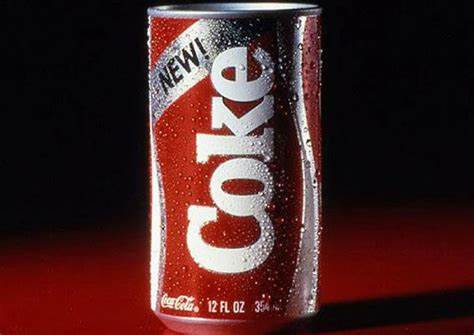
In 1985, Coke was losing sales ground to Pepsi, thus they committed the cardinal sin of introducing “New Coke.” If you were born before the early Eighties, you know damn well what I’m talking about. “New Coke” was what, my friends? Say it with me: PEPSI!!! This hypocrisy flated by Coke’s old jingle, “Just for the taste of it” for their diet brand. Talk about calling shade, a facepalm-worthy bit of commercial huckstering only a fill-in deed to the Brooklyn Bridge outdoes for the b.s. factor. Truly a road best left lesser traveled, except in the establishing scenes of a Stranger Things episode.
TJ found a hilarious meme last night which prompted this silly post today. The second below is a variant of what she showed me and we had a nice little rip over it. Neither of us drink soda too often these days. We’re more about teas, vitamin waters, juices and filtered water. I’m also keen on fruit shakes and almond milk. Then there’s my love of coffee, which gets exploitedanytime we eat at First Watch. Alcohol, we love our wine, and I have my share of beer and bourbon, though the older I get, the more I find the need to scale back.
To take a taste of Coke or Pepsi these days makes both of our tongues cringe at first, and our stomachs rebel within minutes after finishing. Still, funny is funny as are the burps we generate amongst ourselves if we find nothing else to drink but a soda.
So for fun, where do you all fall in line, if it all, Team Coke or Team Pepsi?
A personal road lesser traveled, some time on a Sunday to read with the fur babies keeping me company. Then again, getting a hike in with the one you love on the same day is nothing to sneeze at, either…
I had the pleasure of seeing George Clinton with P-Funk play live years ago. It was a marathon performance lasting four-and-a-half hours and still the man went on, after the venue was half full after being a sold-out attendance. I was there with my ex-wife, who deserves a medal for hanging in there with a funk overdose only geeks like me could appreciate. The secret to Clinton’s success in his live habitat, since I was told by other fans he notoriously plays on until a few people are left, no matter small or large the venue, is that he shuttles his family members onstage to rap or slap bass in between songs. Or he toodles off in the wake of his own scats while P-Funk jams away for minutes on end until he emerges once again. A funk spree for the ages at any those gigs.
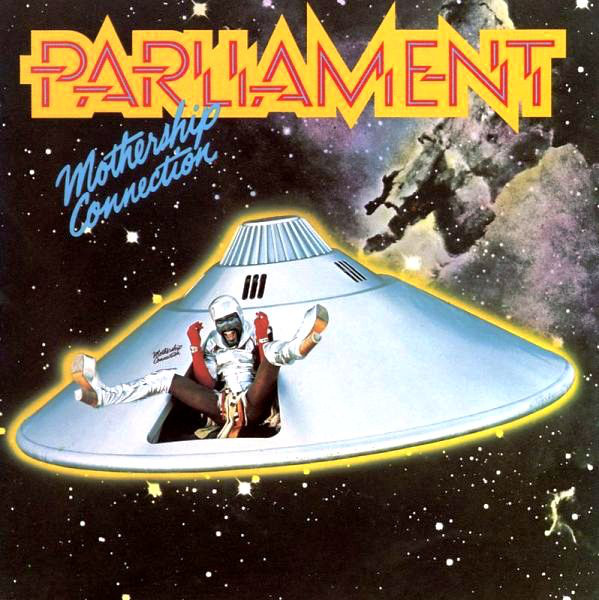
All serious fans of Funkadelic or Parliament know any album by each is subject to tight, focused rhythms and a showing off of soul chops you sometimes forget exist in their ensembles…or it’s a freestyle freak fest, like Parliament’s lauded fourth album, Mothership Connection. A concept album pretty daring for its time, Clinton’s “Star Child” persona opened the world to a possible neo-state of existentialism with a grand funk party in outer space. A further reach into the universe beyond what Funkadelic posited on Free Your Mind and Your Ass Will Follow and Cosmic Slop. At its core, Mothership Connection is an anti-funk, subtle protest piece in the interest of black empowerment, which gained a hip-shaking foothold in American music of 1975 before being bastardized into disco. The fiery civil rights movement bled into the Seventies with a sense of self-awareness that Mothership Connection boldly stamps with doobies tucked at the ready, a more peace-laden call for equality, if not a pro-black power stance without the upraised first, or later in history, a protesting kneel. The Seventies were also obsessed with the space race and science fiction, thus Mothership Connection capitalized on a theory that life has to be more fair, more equal, if left in the hands of people getting off a tainted, racist Earth and letting it all hang out. If only Malcolm X and Martin Luther King, Jr. had lived to see it all…
“P Funk (Wants to Get Funked Up)” dawdles around in spots with nattering amongst the band, to themselves and to their listeners. All of it’s on purpose, because once the funk drops on this cut, it drops. Some of Parliament’s most badass licks show up here and especially on the hard driving “Unfunky UFO” and “Supergroovalisticprosifunkstication.” Try saying the latter at any speed. Naturally, the calling card tune to Mothership Connection is Parliament’s best-known anthem aside from “Flashlight,” the nappy party blast of “Give Up the Funk (Tear the Roof Off the Sucker).” Resistance is futile whenever this cut spills out of the speakers, yownt!
Mothership Connection, which any soul or funk-loving freak must tout in his or her collection like a badge of honor, is also well-known for its easygoing slides from “Mothership Connection (Soul Child),” its low-key pleading passages of “swing down, sweet chariot, stop, and let me ride” being brought to second life as a beloved rap sample in the 1990s from Dr. Dre. Parliament gave us all “the bomb” on this one, assuming you have enough jive inside to let it detonate inside your ears. Yownt!
Emmylou Harris – Elite Hotel
My parents used to tell me when I was headbanging teenager that I would one day grow up to like country music. I was emphatic in my rebuttal, much as my own son is against just about anything I listen to that’s not today’s hip hop. I tease him now and then, reminding him I raised him a revolving diet of metal, alternative, punk, jazz, classical, funk and soul and 1950s rock ‘n roll. Only the Fifties have stuck with him at this point, more in reverence for his grandfather. I do see myself in him when he sneers at me if I catch him poking his cell phone at the car stereo when something heavy comes on to capture the song title and artist. Only a matter of time, kid, just like it was for me. It took me many years down the road, but you know what? My parents were right. I did grow to like country music, only with a caveat.
There’s little to no modern country, I should say in the mainstream, that I can get with, though I’m always bending an ear to alt-country, alt-folk and underground hipster country, along with clattering bouts of psychobilly which throws nods to Hank Williams and Hank Snow all the time. My cutoff for country appreciation is around the mid-1980s. Thus, it’s not Taylor Swift, but Emmylou Harris, who is my be all, end all when it comes female country singers. And there are tremendous ladies having come down the bend from Nashville, Texas and the southern quarters. Patsy Cline a de facto choice. Wanda Jackson being a royal badass for country and rock ‘n roll in her time, like her male counterpart, Jerry Lee Lewis. I enjoy Harris’ more subtle seduction and swooning angst which float beneath her music. I feel sparks of lust by Harris’ singing alone, as much as I, like most of her fans, just want to sling a brotherly arm around her shoulders and say, thank you for the empathy, here’s some in return. If the idiom that country is crying in your beer music, Emmylou Harris can make you want to face plant into your suds.
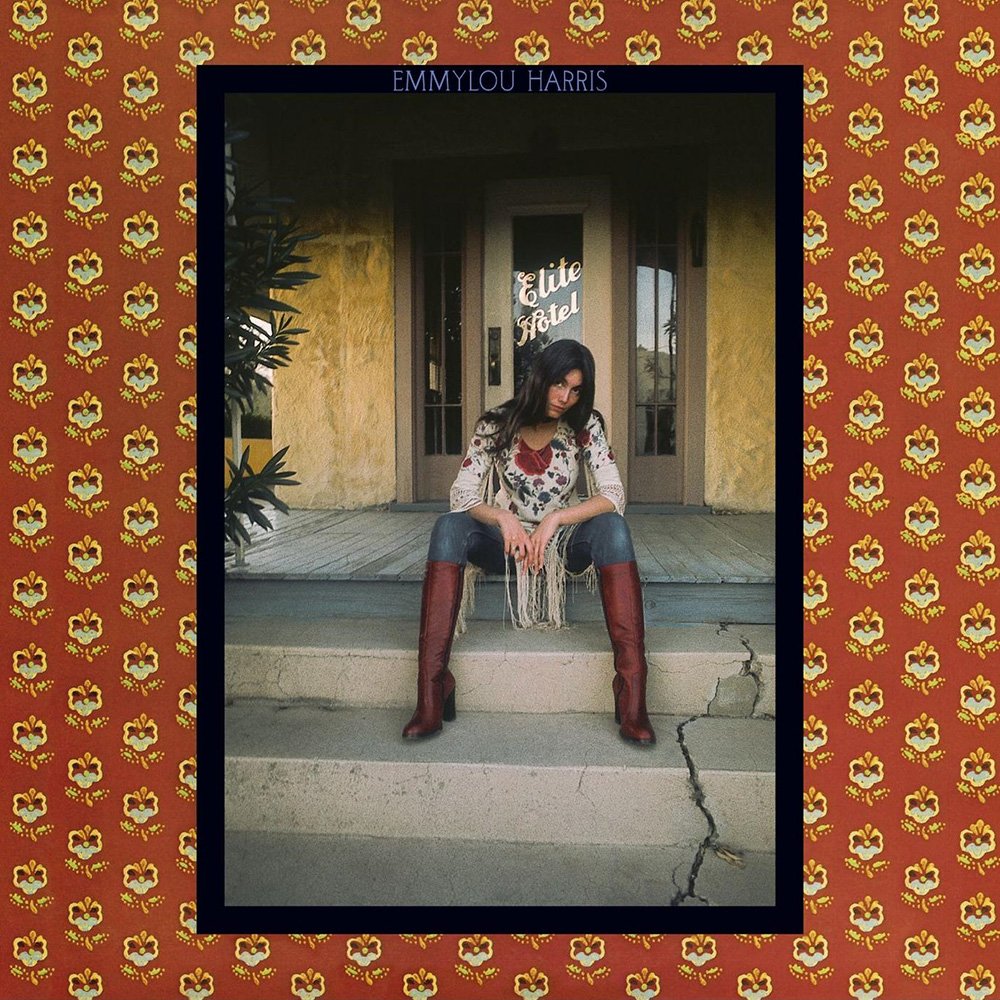
At the same time, Emmylou Harris has a maverick side to her music, which could put her in good company with Waylon Jennings, Willie Nelson, Tompall Glaser and Jessi Colter and the celebrated Outlaw brigade of country music of the Seventies. Elite Hotel is probably my favorite Emmylou Harris album, one reason because every single instrument (played by 24 musicians including Harris and even Linda Ronstadt on backing vocals) you’ve ever thought of in 1970s country dashes her songs including dobro, mandolin, strings and pedal steel. Elite Hotel is one of the most textured country albums I’ve ever heard, and it’s mixed between brisk and up-tempo numbers to pokey melancholia. Between are naughty little nuggets like “Feelin’ Single, Seein’ Double” and “Ooh Las Vegas” to give Harris’ good girl image at the time a little of bit street tarnish–in a good way
Harris is only credited with co-writing the peppy opener, “Amarillo,” while the rest of the album bounces between covers and tunes from other contributors. She does a spectacular take on The Beatles’ “Here, There and Everywhere,” while Buck Owens’ “Together Again” is even sweeter under Harris’ charms. I’m especially fond of the powerful anthems, “One of These Days” and “Till I Gain Control Again.” You see, my parents told me back then, the older you get, the more life you live, the more you start to get country.” I get it, Mom and Pop, I get it.
Siouxsie & The Banshees – Tinderbox
There are some albums I feel so strongly about, so much in love with that I catapult them to head of their respective genres. In the same way I declare Iron Maiden’s Powerslave the finest heavy metal album ever laid down, so too would I drop the tag upon Siouxsie & The Banshees’ Tinderbox for alternative rock. This, amongst heralded classics such as The Cure’s Disintegration and Head on the Door, Depeche Mode’s Black Celebration and Songs of Faith and Devotion, New Order’s Technique, Joy Division’s only two albums, Closer and Unknown Pleasures, Peter Murphy’s Deep, PJ Harvey’s Rid of Me, Sisters of Mercy’s Floodland, Ride’s Nowhere or The Smiths entire catalog.
A revered act amongst Goths and the esoteric community, most fans cite Kaleidoscope, Join Hands and the immortal Juju as their favorite Siouxsie & The Banshees album. There are plenty who subscribe to the vampish anti-pop of Peepshow. I listen to Siouxsie and her post-punk phenoms at least every other month, the first go-tos are always Juju and Tinderbox, the heavier lean going to the latter, while my witchy friends are most wont to glom onto the murky magick spun into the former. Both albums spellbind me, pun intended, but Tinderbox, man…
Siouxsie Sioux and her right-hand man, bassist/keyboardist Steven Severin were in a transitional phase with Tinderbox, not only bringing aboard the hypnotic John Valentine Carruthers on guitars and keys (he is beautifully sinister in the last stanza of “92 Degrees”), but in the glossy refinement the band had been building up to. Tinderbox is a decorative album, an ethereal album, a layered masterpiece with all components moving flawlessly within their own company. Superstition later tried to be a diva-ish alt-pop monster, but they’d already achieved it here on Tinderbox and with far more moving parts. The irresistible pop punch of “Cities in Dust” has enjoyed a re-emergence in today’s listening society, partially because of the beat, partially because it’s textured with so much melody and because it’s a total kick wallowing with Siouxsie Sioux on the chorus, “Whoa…ohhh…whoa…oh, your ciiiiityyyy liiiiiesss in duuuuuuuuuuooooooost….my friend…”
Siouxsie Sioux is at her sensual best, but there’s so much to Tinderbox you need to listen to it repeatedly to soak up every nook and cranny of it. Drummer Budgie planted one of the all-time great rock percussion performances in history on Tinderbox you’ll need a spin or two just to key in on him alone. Whether he’s in full slam mode on “Candyman,” dropping marching snare rhythms on “92 Degrees,” dancing luxuriantly across his echoing toms and snares on “Land’s End,” “Cannons” and “Party’s Fall,” every single track belongs to Budgie. Listen to him explode all over the final minute of “Party’s Fall,” it’s sheer rapture. His snappy rhythm escorting “The Sweetest Chill” is made even more savory with dancing hi hat taps without ever losing his stride.
Seriously, I could spend this entire writeup on Budgie alone, but what Tinderbox did better than any Siouxsie & The Banshees album was mixing their ghostly keyboards and tapestried strings into the most palatable and rich tones ever dared in alternative rock. Every single song, especially if you get the reissue with the frolicking instrumental “The Quarterdrawing of the Dog,” is worth your undivided attention. “Quarterdrawing” sounds like Robert Smith of The Cure dropped in for a spell, since he’d already done a touring stint in the band to help out once, and he also enjoyed a side foray with Steven Severin in The Glove. What a glorious time in 1986 to be a part of this scene.
King Diamond – Abigail
Only a devout metalhead of old would put the voice (or shall I say it in plural form) of the legendary King Diamond upon the highest pedestal of musical achievement, much less heavy music. Only Ronnie James Dio and Rob Halford supersede King Diamond, front man of the groundbreaking Danish arcane metal band, Mercyful Fate, Diamond himself enjoying a doubly spectacular solo career. So much King Diamond (real name Kim Bendix Petersen) and his wide-flung vocal ranges of countertenor and falsetto behind the unraveling of his horror stories in song earned him the high praise as “The Stephen King of metal.”
A King Diamond listening experience is an experience, period. If it’s your first time around him, be prepared. His style is not for the timid. Only a weirdo like myself could listen to The Weeknd before coming to a King Diamond album, but if Siouxsie Sioux as mentioned earlier, had an endearing set of swirling vocal ranges, King Diamond trumps her with his confrontational up-and-down pitches. The unholy corpse paint Diamond’s always worn onstage is the evil devilution from Kiss’ kabuki facades, and along with Mayhem and Celtic Frost, the black metal scene scored its image, for better or worse.
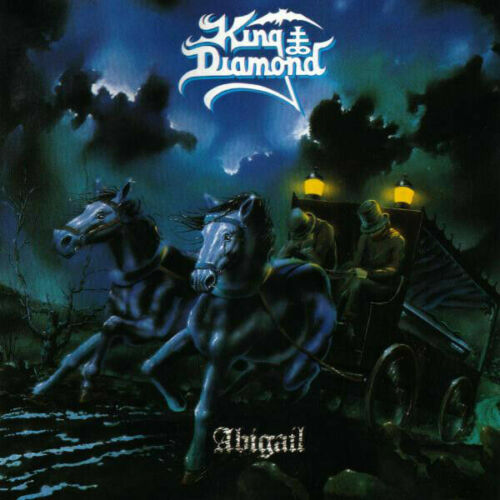
Vocally, King Diamond gives personification to his muses inside his macabre metal stories through yowls and growls and shrieks and yet all of it is superb syncopation. For most fans, myself included, Diamond’s second solo work and first concept album, Abigail, remains the highest hallmark of his considerable achievements. It tells the spooky tale of a young couple, Miriam Natias and Jonathan La’Fey in 1845, inheriting the manor of Jonathan’s lineage and being terrorized by the “family ghost,” Count La’Fey. In essence, a Hammer film metal style.
The supporting cast behind Diamond was nothing short of first class with Andy LaRocque and Michael Denner on guitars, Timi Hansen on bass and drumming superstar Mikkey Dee. Dee would later go on to a spectacular, decades-long run with Motorhead, and the foundation to his prowess is found all over Abigail, particularly his trusty double hammer on “A Mansion in Darkness” and “Omens.” As a single with a video for “The Family Ghost” nobody ever expected to see on MTV’s Headbangers Ball, the song remains an ethereal metal classic for all time, along with the unnerving title track. The lurching and marching intro section of “Arrival” hints at the doom to come, while the album’s dramatic backend, “Black Horsemen” is an emotional finale and seeming farewell to an exquisite horror classic in music form. I say seeming farewell, since Diamond delivered a sequel fifteen years later in 2002, Abigail II: The Revenge. When in horror…
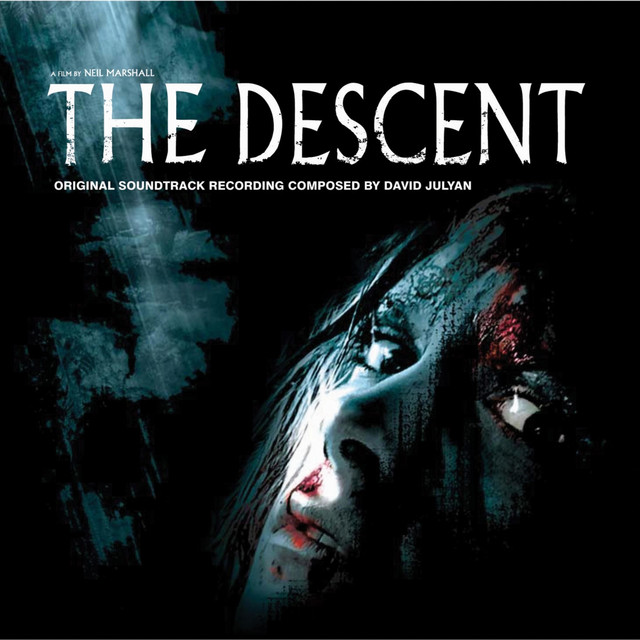
The Descent original soundtrack – David Julyan
While I was writing my article for Horror Tree on badass women of horror this week, I spun a few soundtracks to keep me in topical flavor like Goblin’s Suspiria, 1977, Pino Donaggio’s haunting score for the 1976 Carrie and David Julyan’s supple, sometimes explosive flow behind 2005’s The Descent. As one of the best horror films of the modern age, The Descent in concept hits a raw nerve, especially if you’re claustrophobic. If you’re an adventurous outdoor explorer, the prospect of spelunkng an in-the-know-only cave in the Appalachian Mountains seems like a hot time, especially for a group of friends carrying a tradition for high stakes outdoor weekends.
When one of them, Sarah (Shauna Macdonald) has the extra baggage of personal devastation coming to the table, it only makes The Descent that much more guttural as the horrific events unfold. Bad enough a cave-in happens, expected in a horror movie but still terrifying when it unfolds before the viewer. Bad enough deceit revealed to Sarah from the film’s mouthy snot, Juno (Natalie Mendoza), unfurl at the height of the girls’ uncertain predicament. Nobody coming to see The Descent back in 2005 were prepared to be assaulted (much less the characters inside the caverns) for those ravenous, nosferatu-looking mutants (called “crawlers”) only comic book nerds would recognize from the pages of The Fantastic Four, The Mighty Thor and The Incredible Hulk. The fight to escape the cave itself is so grand it presents loss amongst the fivesome, this before the monsters ever show up. Once they do, holy shit.
David Julyan masterfully threads his symphonic yarn behind the story, keeping a breezy tone of the main theme, established on “White Water Rafting,” repeated here and there throughout the score as needed to deposit a false sense of insecurity. Hollow, diving synths jerk us into the hole with the girls on “Into the Cavern” and “Down the Pipes” until smacking us all upside the ear with “The Tunnel Collapses.” Julyan paints anxiety through the remainder of his score with soft, cautious measures, pounding the eardrums with catatonic blasts during action spikes. For all this toying, however, the payoff comes on track 18, “The Crawlers Attack,” in which Sarah makes her dramatic escape. In the movie, you see all of Sarah’s shock, her naked anguish, all that she’s been through from the loss her husband and child, and now her friends. David Julyan orchestrates a sorrowful set of strings and horns behind Sarah it rakes the soul to bear audially. A glorious and heartbreaking denouement to a horror tale already pinching at our nerves.





 Roads Lesser Traveled