As we were leaving Shore Leave in its new location of Lancaster, Pennsylvania last week, we pulled into a drive-through to snag some cool drinks for the ride home.
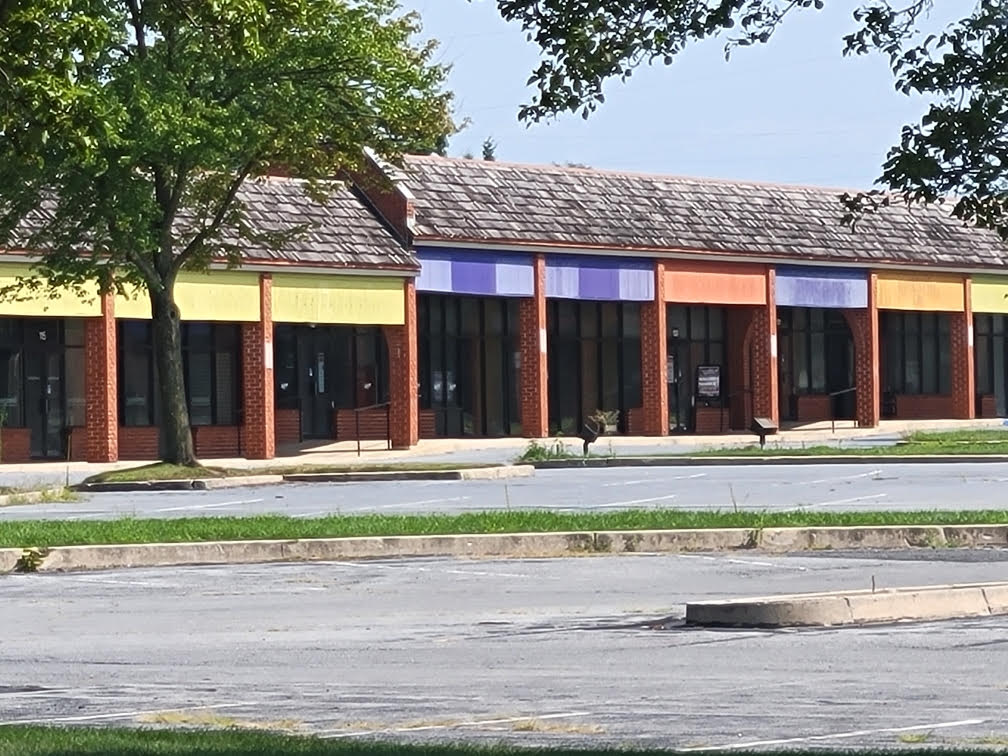
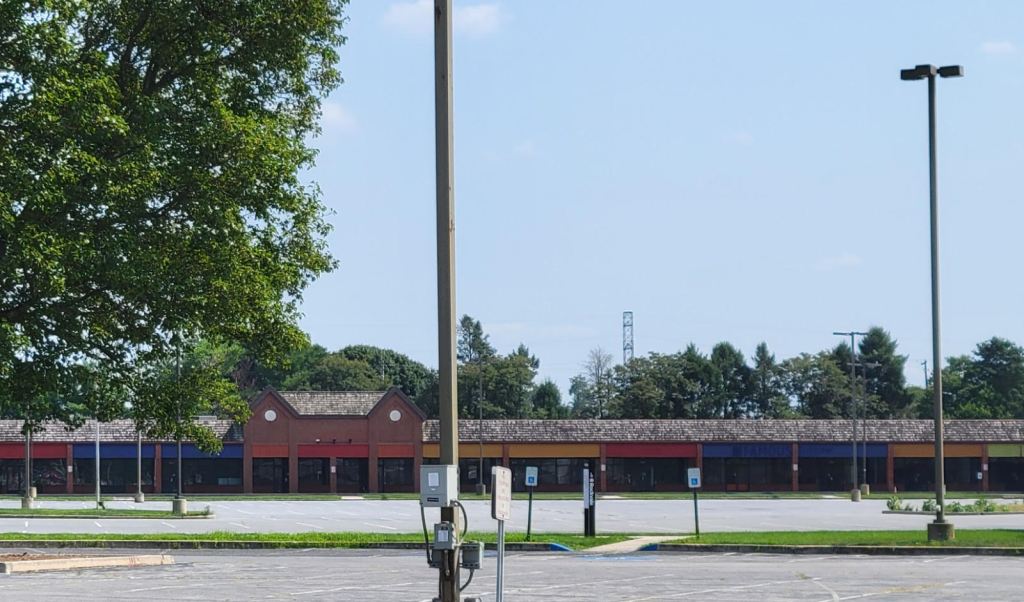
I seldom get the luxury of lazing upon my surroundings in the car, but being the passenger this time, I spotted a pushed-off strip center shopping mall that no doubt went up during the 1980s if not the Seventies.
Now strip malls are still very much a thing as opposed to the megacomplexes that were the lifeblood of my generation’s teen scene. Thus, I was a little caught off-guard, despite being a thorough student of economics, to find a completely barren strip center like this one. With a kaleidoscope of barren marquees, no less.
I mean, this sucker was one hundred percent dead.
Nothing leased, only one other car slinking by in passing. At one time, no doubt a major source of local commerce, considering its otherwise prime location planted on the main business artery of Lancaster Route 30.
The problem, I see, and I think it’s becoming more commonplace with failing strip centers, is not so much the syndrome of online e-markets offering far wider choices and pricing landing somewhat closer to the targeted retail cost.
Route 30 in Lancaster, like most American commercial routes, is a lifeblood to the local economy, so much every possible mainstream food and retail operation you’re looking for is almost guaranteed to be there. So much there are three competing steak houses in close quarters, one of which gained our business for being on our side of the street, even with all three being a stone’s throw from the convention.
The difference I saw in the strip centers of Lancaster that were thriving with stuffed parking lots, is having closer access to the main road. The strip mall you see here was pushed off a smidge of a block from Route 30. You had to rely, back in its prime, upon a guidepost sign directing you in. It’s still there, empty of businesses, but who cares about it when you have three fast food emporiums, a coffee peddler and a closer berthed mini strip burying it?
In other words, out of sight, out of mind. Instant kill-off.
A shame, really, but what I told TJ as I snapped off these quick shots was, “If this was a zombie holocaust and this empty shell was our only safe haven between survival and becoming chow for the undead, we’d be royally effed.”
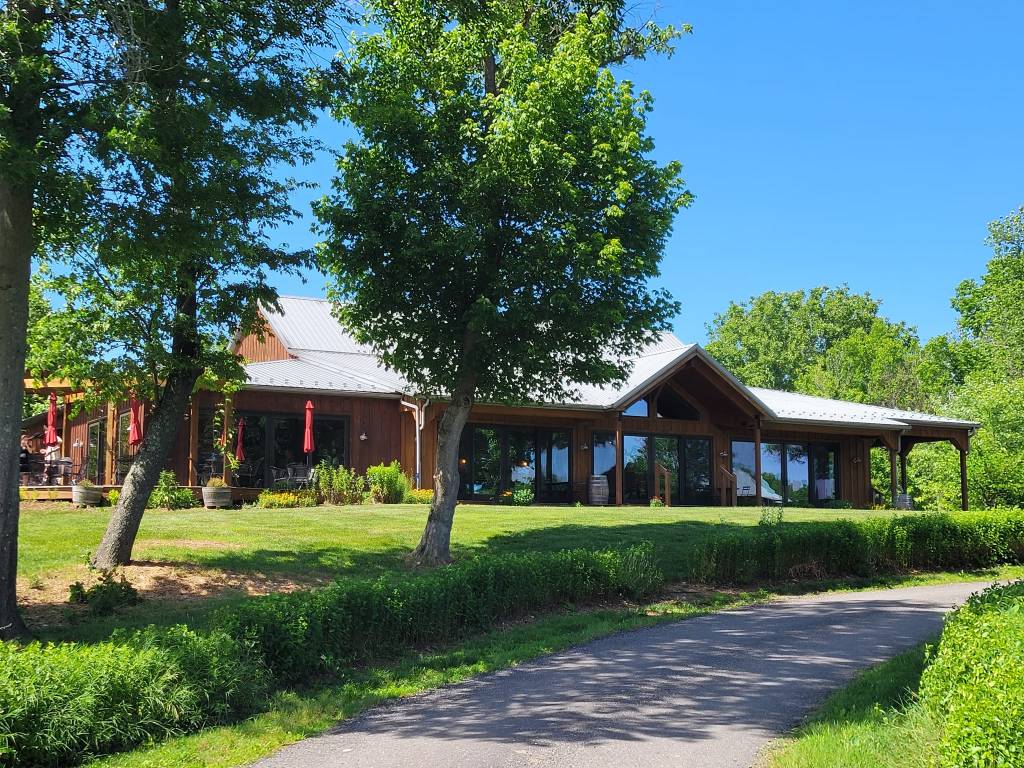
What a wonderful post-wedding gift from my stepdaughter, a tour and tasting session TJ and I enjoyed at a hidden gem stashed in Davidsonville, MD, Dodon Vineyards.
555 acres of prime farmland passed between generations, cultivating a heavy lean toward darker wines like Merlot, Cabernet Franc, Cabernet Sauvignon and Petit Verdot still dealing a wet Rosé, Chardonnay and Sauvignon Blanc for those with lighter tastes. We were graced with wonderful hospitality by our hostess, Hannah and we were able to sample nearly all of Dodon’s current stock. We were paired with a second, younger couple who had just moved into the area from Texas and were fun to chat with.
The estate is housed in this county seat, and you will need a sharp eye to scout the attenuated, at times windy access road, so keep your drinking checked or employ a D.D. to get out safely. The producing grounds of Dodon have been around for centuries, Hannah informed us, noting the estate had once yielded tobacco crop along with corn and soybeans. At one time, the estate had been owned by the Catholic church. As a former Catholic myself, I smirked, knowing full well the wine allegory representing the blood of Christ during communion ceremonies at weekly masses.
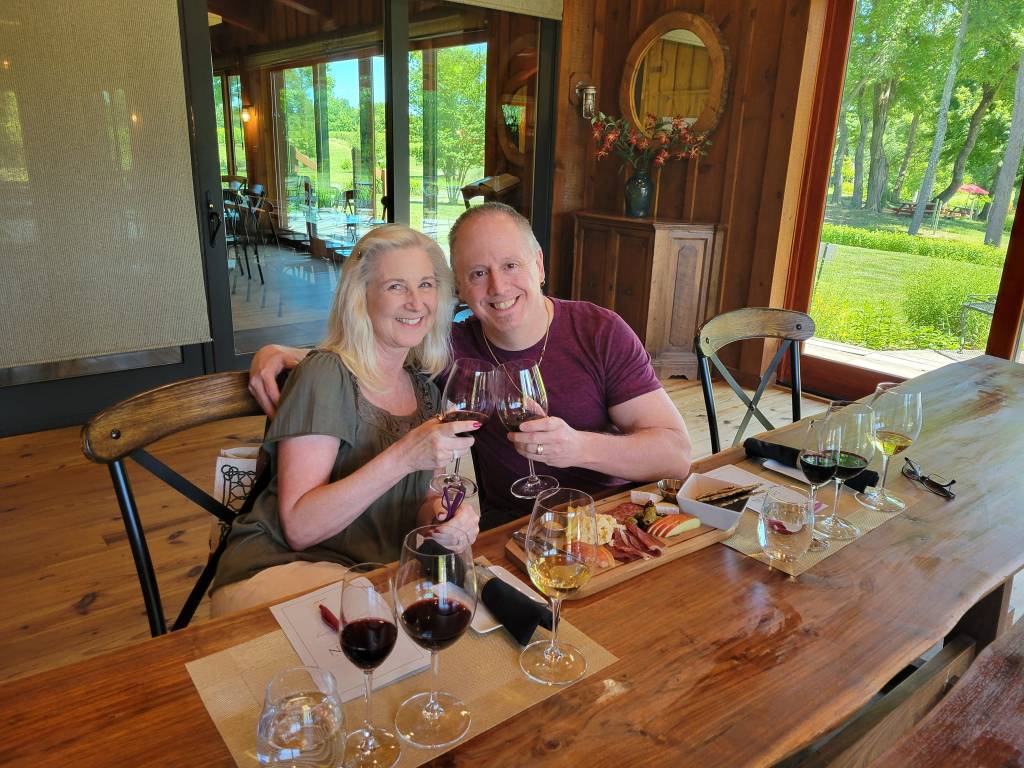
As a group, we all agreed the Dungannon 2019 Merlot-Cabernet Franc hybrid and Oronoco and South Slope (both also 2019 vintage) combining all the estate’s dark wines were aces, along with the finishing touch dessert wine, Salute the Truth. While I’m across the board when it comes to wine, I prefer dark, dry reds the most and Dodon doesn’t fail with those. TJ fell in love with the 2023 Rosé and you can see our preferred blends for our walkaround glass after the tasting session. That’s South Slope I’m pulling on in the second picture.
The Vineyards at Dodon are well-known by Maryland wine aficionados and it’s been profiled as one of the top 15 American vineyards by Gotham Magazine. Dodon is a carbon negative producer, a traditional farming winery where the estate’s sheep chomp down on high grass and their biological waste is utilized as crop fertilizer and compost.
An entirely organic process based on microbe breakdown and regeneration into the soil, which fuse the vines growing Dodon’s prime crop. An old school, nature partnered approach for times where ecological consciousness has become dire, no matter which side of the political fence you sit on.
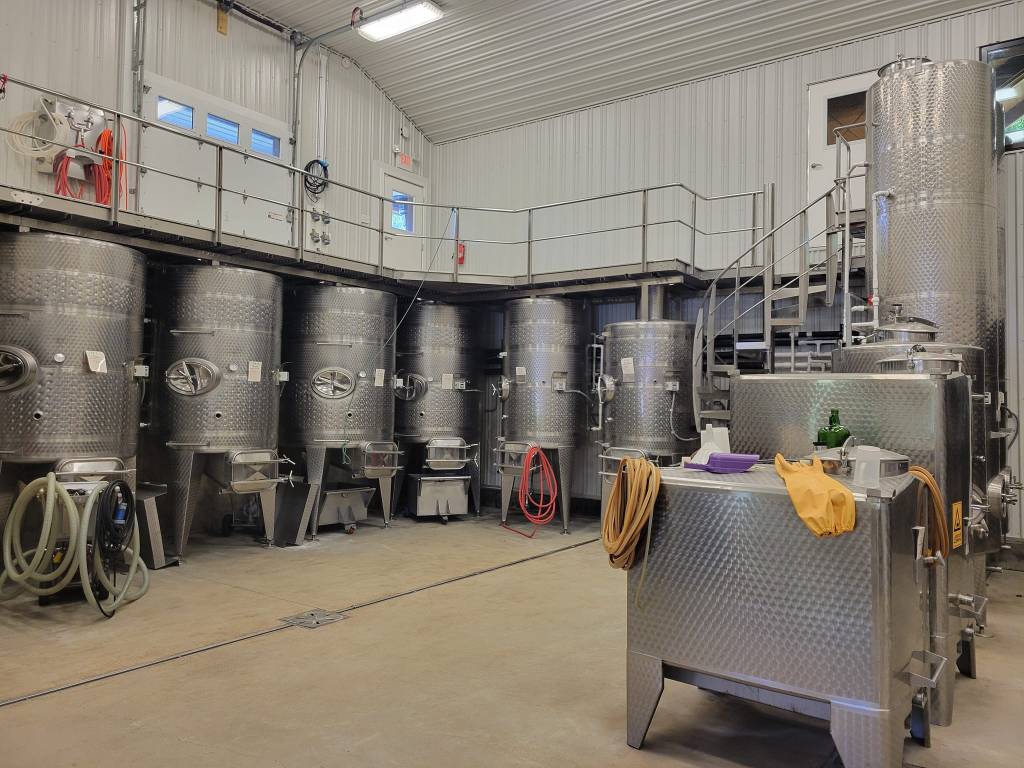
We were particularly impressed with the vats which were emptied during the time of our visit, but the yield statistics Hannah gave us blew our minds for a considerably small operation. The refrigeration room housing all the caskets of fermenting wine was cool to hang in, literally and figuratively. Considering we’d been delayed by a 3-mile backup on Maryland Route 97 due to pesky road construction, our heated irritation was cooled immensely in the storage area, allowing us to relax and relish a beautiful gift we won’t forget.
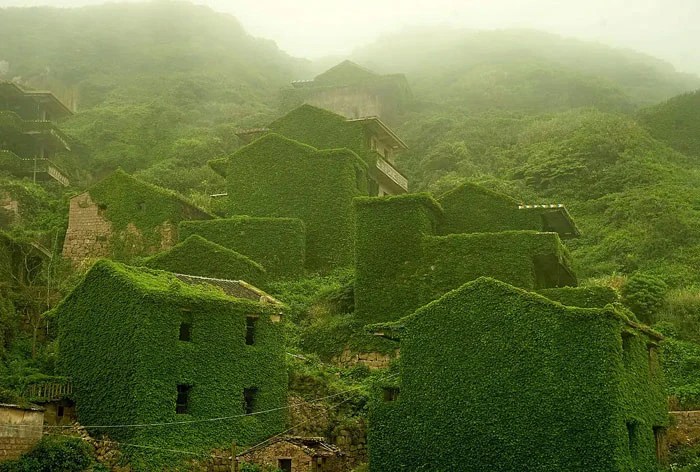
Not sure what location this is, but I found this stark image at another blog, and it gave me pause to see an entire town, an entire mountainside civilization, engulfed, assimilated, merged and ultimately forgotten.
The power lines indicate someone remains amid this foliage-caust, but doubtful much is serviceable here, if at all.
I actually shuddered at this scene. Mother Gaia has her way as she will.
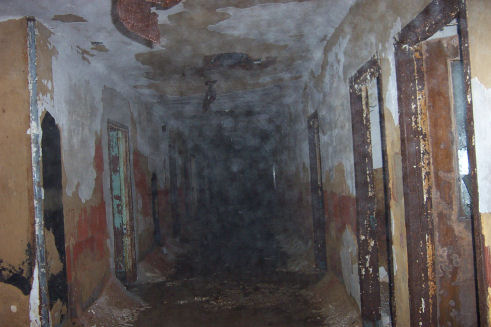
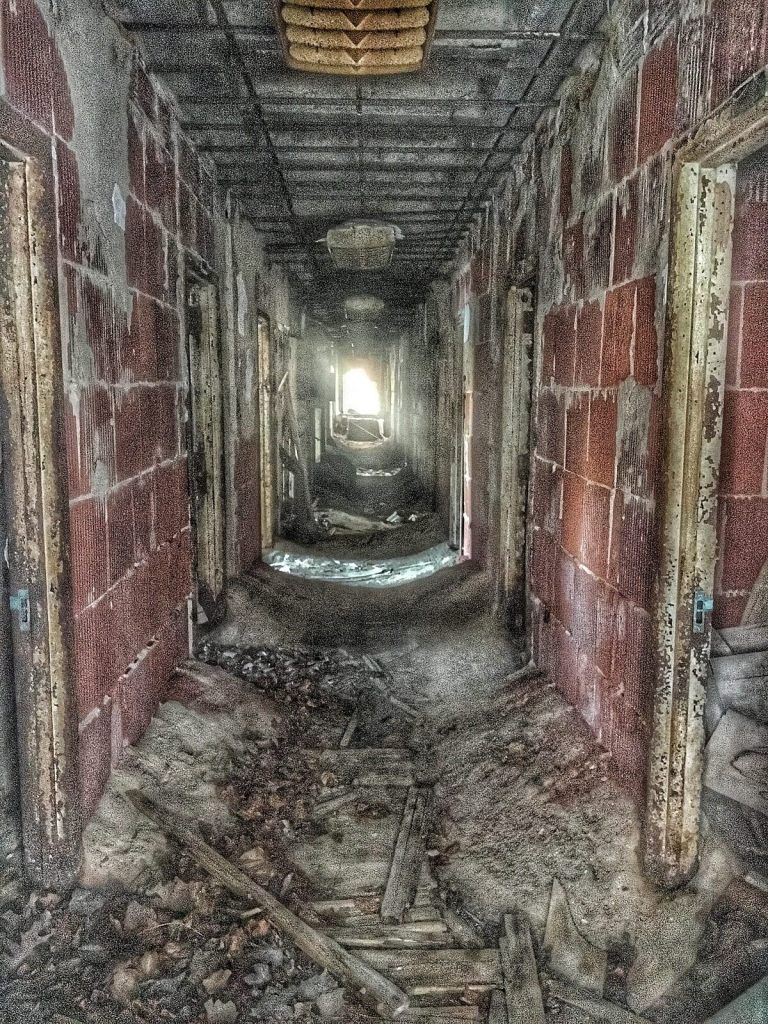
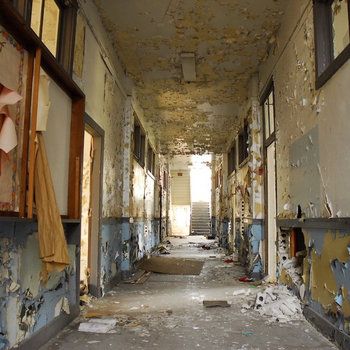
My final horror short story I wrote for 2023 and just got in under deadline, was for an anthology calling for haunted or creepy locations throughout America. While I chose a different real-life location in Maryland carrying its own infamous history of haunts for my story, I took more than a few minutes to absorb these stark photos of this long abandoned sanitorium, the Glenn Dale Hospital in Glenn Dale, Maryland.
The Glenn Dale Hospital was a tuberculous and isolation hospital spotted in the outskirts of Washington, DC, first built in 1934 and closing its doors in 1981. 23 buildings spread over 213 acres to the center, the facility was shut down due to a mass asbestos breakout, which has given the interior of the adult and children’s facilities an ironically leprous, diseased appearance today.
Rumors of human remains being disposed inside the hospital’s incinerator fueled a growing legend of the premises being haunted. It was later proven the hospital burned waste items instead. A series of tunnels connecting the children’s and adult buildings, each housing their own morgues, only added to the growing curiosity from ghost chasers, graffiti artists and horror freaks about the location’s growing infamy.
What we do know is Glenn Dale’s dilapidated walkways, basements and tunnels are dangerous to traverse with corrosion, garbage broken glass, vine overgrowth and metal hunks originally coated with lead paint are all over the place, along with rats, bats and other wildlife making the grounds their home.
You may have seen something like Glenn Dale Hospital from all over the world on the Travel Channel or History Channel, and I’m sure there are scores of left-for-dead sanitariums and hospitals, each bearing their own reputed terrors and ghost sightings. Here in Maryland and the surrounding DC hubs, Glenn Dale has carried decades’ worth of apparition sightings and inquisitive lookee-loos.
I was more than tempted to choose Glenn Dale Hospital for my story, but I feel like it’s been well-tapped already, even incognito under fictional cover. Assuming my story is chosen for publication, I will reveal the location of my setting at that point.
Still, Glenn Dale gives even a horror buff like myself the willies for its ramshackle negligence alone. It’s been said the facilities will either be demolished, or if kept alive, converted into a senior citizen home. With COVID still a real thing, I have to pause and think about a place like Glenn Dale Hospital being stuffed to the gills in its prime with such a calamity as we’d experienced. They were hardly equipped, space or technology-wise, to take on something of such magnitude.
You can’t teach it to the younger generations without giving them a hands-on experience. Going out of your house to a mega arcade, as was immensely popular in the 1980s, is far better than planting yourself indoors day-to-night with nonstop video game action. I know depending on your age, I’ve preached the gospel or committed heresy.
Sure, the graphics for video games today are 100 times better than the analog days of Atari, Midway, Namco, Stern and even the infancy years of Nintendo. One-ups to you, Gen Tech. The cinematic Red Dead Redemption II, Dying Light or any of the countless Call of Duty games annihilate Missile Command, Centipede and Galaga in game play and design. All the Mario games to evolve from Donkey Kong and the days of Nintendo Game Boy are marvels of the modern age, in particular those wacky fun, psychedelic Mario Cart games. A cool addiction.
Photo from the public domain
Not a lick of it, however, gives me the same giddy geekery of smashing the crap out of buildings as either a monster-sized wolf, gorilla or lizard in Rampage from the old days. The only video game in known existence to have given me the same therapeutic purging of a rough day being Simpsons Road Rage from the PS2 days, which is where video games for me stopped. A Friday night with some Chinese and SRR before a late-night horror movie or two could unwind the ruts as good as a Dethklok album later in life for me. Some friendly, thumb-spraining tag team duke outs on Tekken 2 were also gnarly, for that matter.
My kid, who was once very good at sports, and loved to hike with me, soon made video games his obsession as teenagers find their own path giving them verve. We’ve since been submitted to PS4, Xbox One and now PS5 in succession, and while TJ may have worked a stint for GameStop in another life and cheers on the boyo on when there’s energy to do so, I’ve lost most of my passion for video games. Call it overstimulation, a whiff of sour grapes, a bit of old fogeyism and hangover from so much cannonade and bloodthirsty desensitization. I say it inside my head over and over, other than the Lego video games (especially Marvel, DC and Star Wars) this shit just ain’t fun anymore.
To think Mortal Kombat was considered gruesome nearly 31 years ago. Child’s play compared to the spine-tearing, sinew-ripping, disemboweling bucket of gore it is today. 17-year-old Ray would’ve been champing at the bit like my kid is for tomorrow, the release of the newest MK mayhem, Mortal Kombat I. Yeah, video games are following the trend of comic books by constantly rebooting back to number one. Vonnegut was a fragging genius with his eternal shrug off phrase, “So it goes.” A lot more fun shaking one of the early day Mortal Kombat machines against a friend at elbow’s reach inside an eye-popping arcade than anonymously online where your opponent might be hacking your credentials to the digital bark, “FINISH HIM!”
So enough of the whining from yours truly about today’s video games. Before I come off like a crotchety old coot, I like the teenagers as much as the adults in Cobra Kai, and I impressed the young shampoo girl over the weekend while getting a haircut by mentioning the YouTuber Markiplier as we both talked about looking forward to the new Five Nights at Freddy’s movie coming out. My kid shoved both down my throat to the point of surrender and neither are a bad thing, I confess. Like today’s rap and hip hop; I cringe at most of it, but really dig Childish Gambino, Metro Boomin, Coi Leray, Shiloh Dynasty and 80purppp. I make a point to find what’s good as the times change instead of staying stuck in my happy place decade. Evolve or evaporate, as TJ loves to say.
But I digress. For all our mutual, sometimes awkwardly failed attempts to meet halfway at the generation gap as a family, my kiddo does have a firm appreciation for the history of video games. He loves my rattling about the day I was given an Atari 2600 for my 12th birthday and how old Atari units used to fry picture tubes of floor model televisions. All to the chagrin of parents from my generation, shelling out to replace Atari zapped color t.v.s, us teens banished with our joysticks and Atari paddles to an old black and white television inside our bedrooms. Necessity versus outright punishment.
Atari and later Intellevision and Colecovision gaming systems relegated to black and white may have sucked, but it kept a pervading familial peace when you had the need to blip, bleep, bloop and digitally Tarzan yell along to those early Activision classics, Pitfall, River Raid, Enduro and Seaquest. Black and white was and still is stellar for classic horror and noir movies, but I think of this whenever I see my kid freak out playing games and whacking his controllers in frustration. Try it and black and white, brah.
You’d never survive the experience, kid, though you got a snowy screen simulation of it at Timeline Arcade, this past weekend didn’t you, dude? After all these trips there, it finally sunk in with you. All things being relative, you do have it nicer and easier. My family’s house didn’t look like the retro assemblage of plywood walls and gaudy floral print sofas Timeline Arcade recreates like museum pieces (cough cough, ouch), but I knew many who did.
Getting on with it, I posit there’s a lot more pleasure to be had entering a vast, glowing emporium of machinery thrusting ambient digital animation in your face. Games you control with a stick and one to three firing and maneuvering buttons. You’re engaged far more against a machine forced into a standing position for most vintage arcade games, even those you sit in and subjected to senses assaulting gameplay. Heck, man, Pole Position back in the day put you into a seated position and while primitive today, it was one of the first video games simulating an actual car race you had to qualify for before you could continue on. All the quarters lost on that game alone, total Bummersville…
Retro arcades are popping up around the world as my generation gets older, a testament to our youth, where video games were as much as a social outlet as a place to test your might at a quarter a pop and let your worries free for as long as your skill level allowed. Kids went to arcades as much to shoot the breeze, date or summon the stones outside of school to ask for a date. I think of all the french fry and pizza grease we left on those joysticks for the next kid to groan at. Not so appealing in the post-COVID days, but hilarious in retrospect.
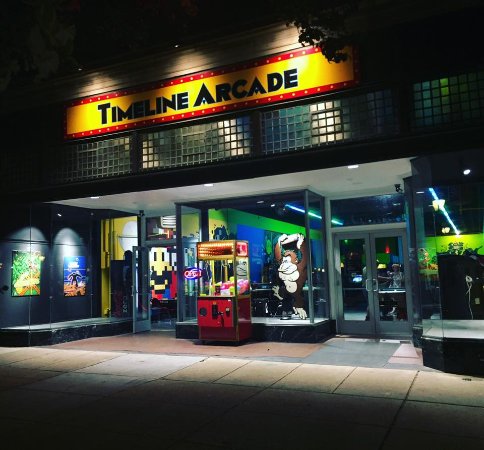
My son is so immersed in gamer culture he demands our audience more than a teenager should and he has for years. Yet, he knows the key to our investment of time watching him nefariously plow through zombies, drug runners, cowboys and enemy forces with maximum carnage is to suggest a run to Timeline Arcade in York, Pennsylvania now and then. As he did this past weekend. A smart lad, that one.
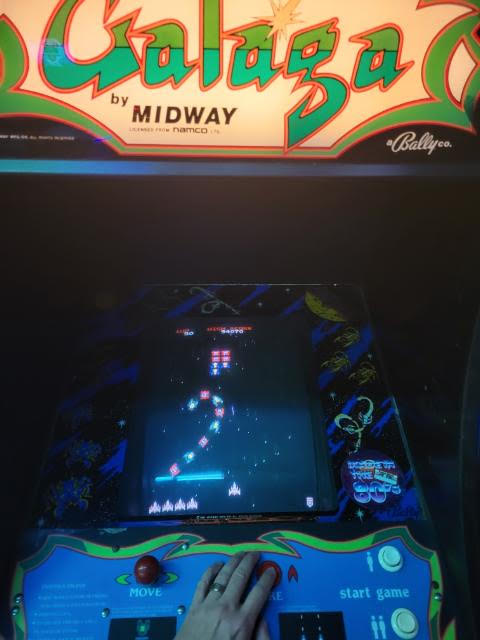
Both TJ and I are still masters at Galaga and I still clear seven or eight zones on Ms. Pac Man and I can still whip the crap out of insects with digital “arrows” on Centipede. Rampage, I still get the top score most times, though I was laughably pathetic hitting the transport button on the original Asteroids to repeated self-destructive folly. I took a picture of my hyperspace topflight “one of the top ten best” score of 40 for nyuks sake. Also laughing to myself had it been 1981, I would’ve been the same pissed-off rager my son is getting blasted by “camper” shooters in Call of Duty, Fortnite well before that.
That was when a pocketful of quarters was an Eighties’ kid’s treasure, his manna. Nothing stunk worse than nagging the piss out our parents for a ride to the local arcade (the totally rad, intergalactic fantastic Space Port being our idea of heaven) and blowing through our money in nanoseconds. If you couldn’t find friends to b.s. with, the wait for parent pickup could be interminable, especially in silent envy of those video game heroes of yesteryear hogging a machine on a single play. Bittersweet to think of today.
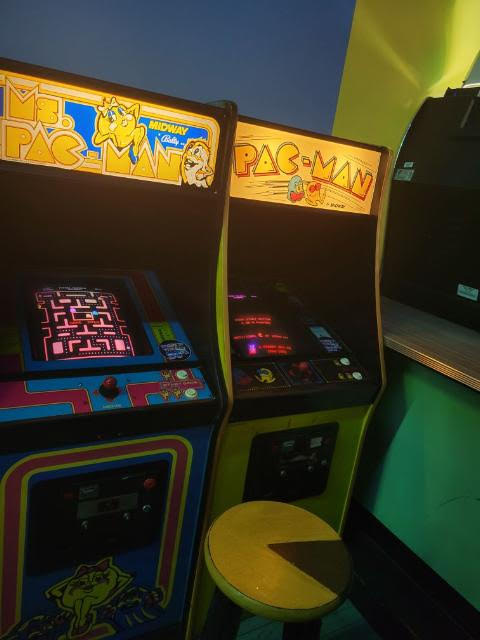
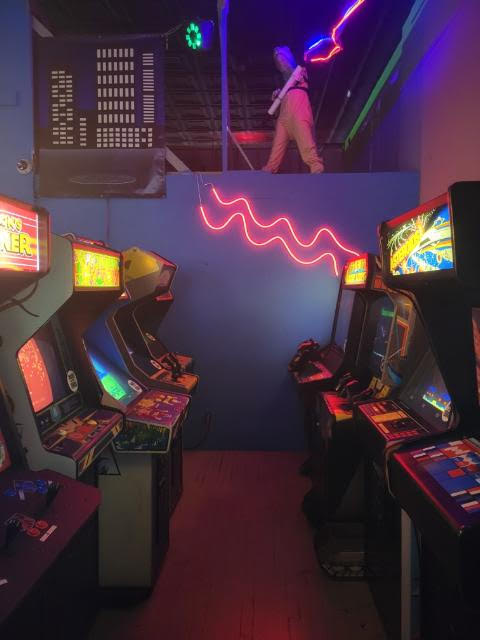
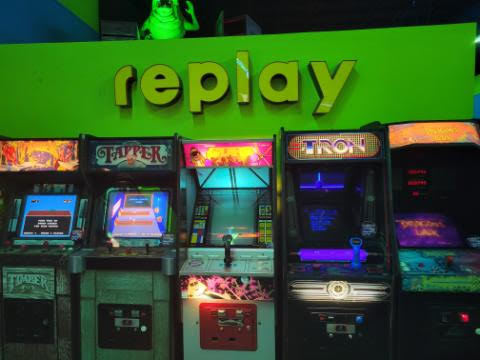
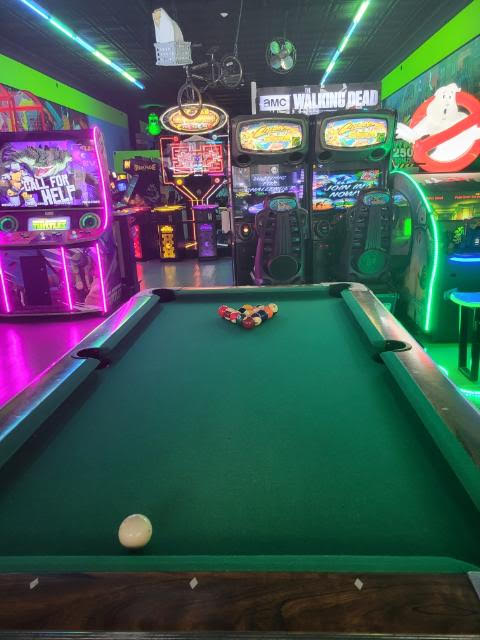
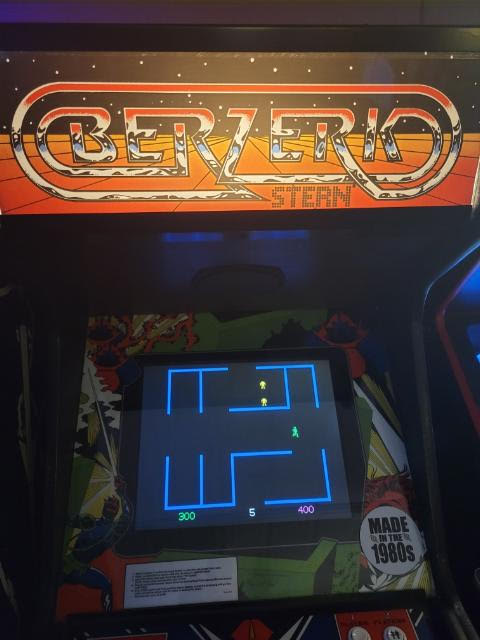
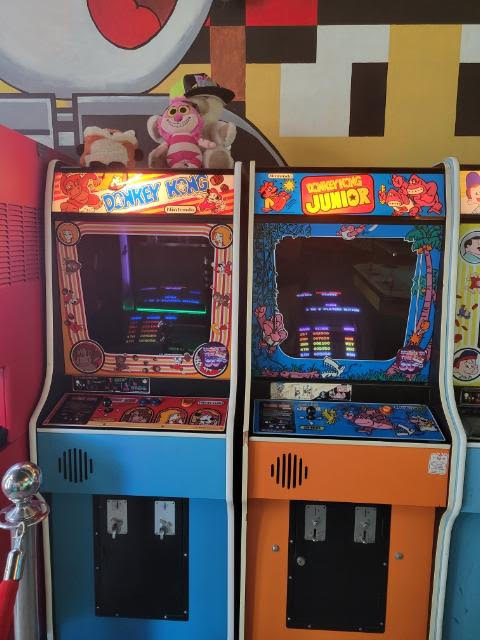
What’s great about Timeline other than recreating all that neon piping in certain spots is planting those old classics you loved, Frogger, Tapper, Tron, Karate Champ, Dig Dug, Dragon’s Lair, like sentries alongside a bunch of throwback video games you never knew existed then. Even those ’90s goodies, multi-player smash-up games featuring X-Men, Teenage Mutant Ninja Turtles and The Simpsons. There are rows of pinball machines, hoop shooting games you can actually sink on repeat, Skee-Ball, a pool table, air hockey, even a station for the youngbloods with hand shaped chairs for them to lounge on. Those being plugged to Xbox and PS5. It’s the ultimate hangout, no matter your age.
Photo from the public domain
You pay $10.00 an hour for unlimited games, but Timeline offers a better deal at $25.00 for a day’s worth of play, and they have more than enough to keep you occupied until you tire out like my kid did after three hours of non-stop playing. Funny how he can go hours in a loafing bed-bound position. For all the griping I did earlier in this post, this was my thirteenth visit to Timeline (inclusive of their closed sister location in Hanover, PA), and I was nowhere near ready to quit.
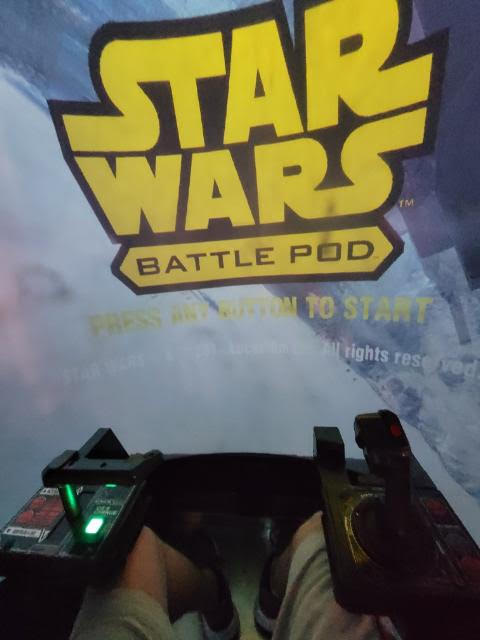
I played like a madman, even with the opportunity to take a food break and come back later. I shot pool and played Star Wars games of the past, including the one from the Eighties where you blow up the Death Star over and over (still taking stupid pride in it) before sinking into the contemporary and supremely badass Star Wars Battle Pod. Talk about topflight, whew. You are there in that sucker.
I’m not gonna lie. Timeline Arcade hypes me every time we go. I may have lost my taste for newer games within a home environment, but I took TJ here on our second date and she whupped by butt at Time Crisis II and held her own on Rampage. We both giggled like idiots playing Space Invaders while reminiscing when we’d first done so in our youth. She loved it so much she insisted we take my son a week later. It was a fun and natural way to break a new woman into his life and we won’t ever forget that precious bonding moment. The photo set from that day is a bigger treasure than a pocketful of quarters.
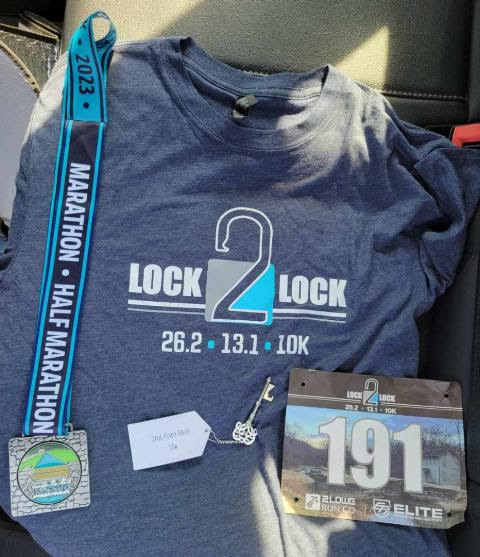
September has been good to me with my running, first at the Talbot Thrive 5K race I ran two weeks ago in the beautiful waterfront town of St. Michael’s, Talbot County, Maryland, in which I posted seventh with a finish time of 26:38. Then this past Saturday, I took down a 10K race running alongside a portion of the 184.5 mile C&O Canal, Maryland, finishing 2nd amongst the men in the field and third overall at 56:27. You gotta understand, I run quite a bit, always have since my teens, but I’m 53 and I’ve slowed down. I usually place middle of the field these days and am content with it.
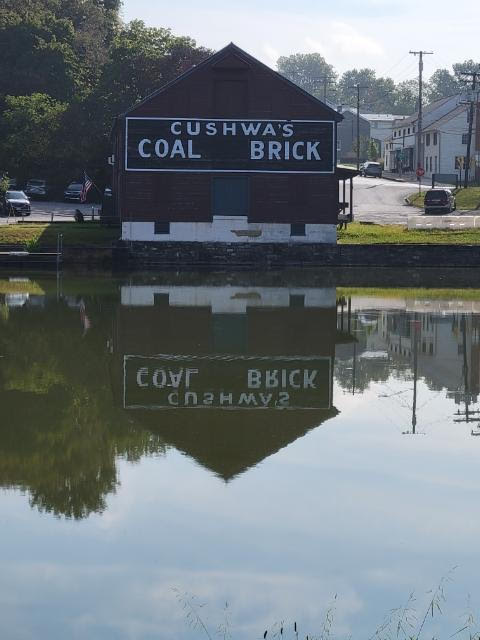
This section of the C&O Canal in Williamsport for the Lock2Lock Marathon/Half Marathon/10K event offered a chance to run alongside the re-watered towpath preserving for posterity more than practicality a form of aquatic commerce and travel of long ago. The channels of the Conococheague Creek Aqueduct spool through the Cushwa Basin in Williamsport where fishermen idle and a field is allocated for organized youth sports. Then it thins downstream into the preserved locks once loaded to the gills with cargo boats. Lock 44, for our purposes on this running event. All eventually merging into the grand Potomac River, which swells from western Maryland down into the nation’s capital, Washington, DC.
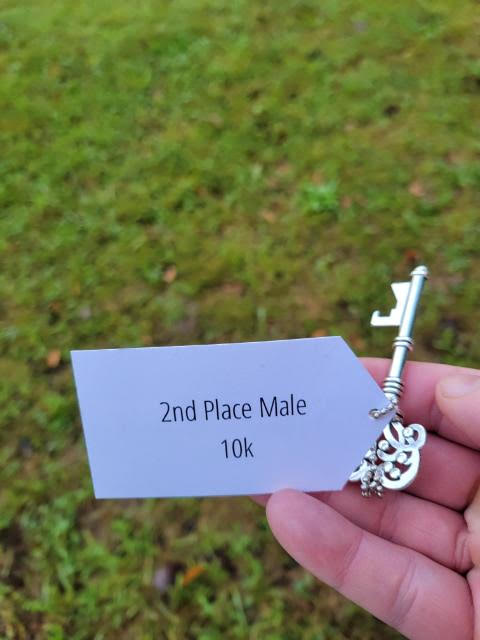
I was stunned, actually, to be handed this 2nd place for males key (the race is called Lock2Lock, get it?), considering I’d been unaware of a few people who’d been competing with me, as they’d told me in friendly camaraderie over post-race bananas and water. I honestly felt bad for the woman well in front of me for most of the race who tanked with half a mile of the 6.2 to go. I smirked when she suddenly bolted away upon seeing my approach from behind, then running out of gas altogether shy of the finish line. “You got me,” she’d told me with a half-smile and half frown. I tried to give her a fist bump, but I could also sense her personal disappointment. I get it, though I’ve long only competed with myself in fitness events.
Honestly, I never care where I finish in a race; my motto is always to finish and finish strong. I run my race and pull over toward the right whenever I sense someone faster than me is coming up hard or at least can take the pass. Life doesn’t need to get so serious, especially at age 53. The win is just crossing the line with your pride as your trophy. Completing three grueling Spartan and a DEKA event taught me that. I wasn’t beating anyone who wasn’t walking half the time in those sports. Getting those finisher medals and shirts are amongst my proudest achievement totems. You have to finish to earn even the shirts and you learn what grit means then, AROO!
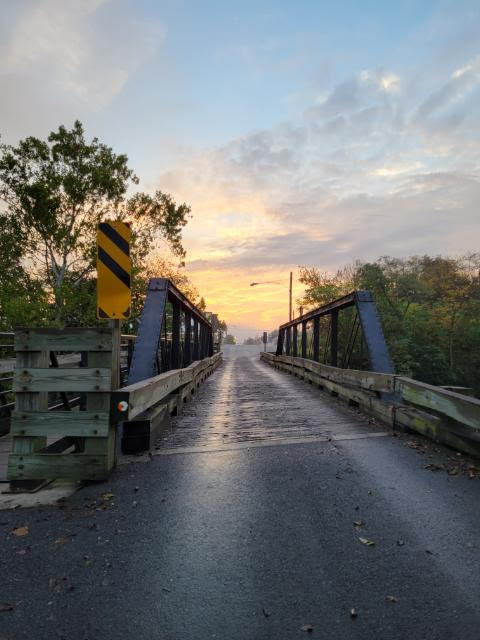
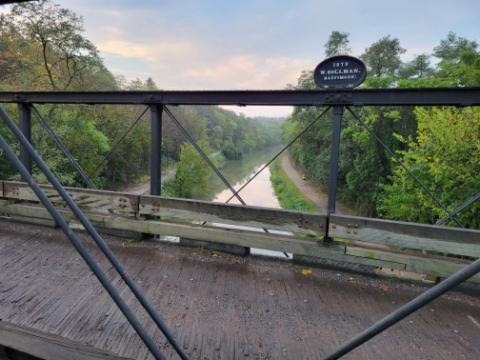
One of the most remarkable structures I found while exploring this canal town after picking up my race packet and shirt (unlike Spartan and DEKA, everyone else gets their event shirt before starting, usually in the interest of promotion and photo ops) was one the few remaining Bollman Iron Truss Bridges left in the United States. Naturally I took two treks across the Bollman as well as the standard bridge where I met a local woman in the dark upon arrival to Williamsport at 6:25 a.m. who was walking her dog. We chatted all the way across to the Cushwa Basin before parting ways. An iron truss “River Rat” in her own right, the senior woman told me she’d just been in the hospital the week prior with kidney stones. You’d never know it by the way she kept pace with me and kept her excitable, barking four-legged pal in check. A Spartan AROO! cheer goes to that old gal.
After socializing with a couple other runners signed up for the 26.2-mile marathon with crickets and locusts greeting us into the marshy realm before sun-up, we parted ways at the Lock 44 lockhouse with wishes for luck and I tramped all around the basin shooting these pictures at the dawn. Consider them my other trophies of the day.
On the hour fifteen drive out to Williamsport, I pulled over at a rest stop at nearby Hagerstown and I’d run across a group of Amish men. They’d been traveling in a pickup truck, not a traditional horse and buggy, and they were all sporting identical white button-down shirts, black suspenders and matching straw hats. Only the long chin wag of the elder differentiated his status. I gave the elder a nod and a “Good morning,” and I’m still chuckling at his thunderstruck expression I’d taken the time to acknowledge him as I would anyone else. Not all of us English are ill-mannered oafs looking for no-no selfies. It doesn’t hurt part of my lineage is German-Dutch who lived deep inside the Pennsylvania Amish heartland.
Sidebar to a most excellent 10K outing was scooching up Doubleday Hill, where Williamsport citizens in 1861 found themselves on the cusp between newly entrenched Yankee and Rebel turf as Virginia declared itself seceded from the Union as a sister Confederate state. Major Abner Doubleday, a hero at the beginnings of the American Civil War at Fort Sumter, South Carolina, was assigned to Williamsport, where he ordered the station of three siege gun cannons once skirmishes over the town’s resources and rights to the canal erupted. While the view is overgrown today, I put myself in the moment, thinking what our ancestors saw from that spot overlooking the river and the town. Doubleday only had a short stint in Williamsport after being transferred to Harper’s Ferry, West Virginia, but the hill retains his namesake today.
As ever, it’s more about the journey than the destination, this thought posed on a 10K trail more shaded inside the woods than out, but the Lock2Lock was one of my absolute favorite races I’ve ever done. Coming across the finish line to a crowd of supporters and a DJ welcoming all finishers with the splendor of Lock 44 to the right, the towering electric plant to the right was sheer gratification. How I finished was irrelevant by comparison.
I’m not sure what message from the divine I’m supposed to take from this, if anything, but in my travels over the weekend, I tripped across this already vintage Coke machine down a random turn in St. Michael’s Maryland, waiting to run a 5K race in town.
Considering vending machines are a bit fewer these days and most accept swipes preferable to duckets, and there are those tap-baiting hundred flavor Coke product dispensers more en vogue for today’s choosier soft drink connoisseurs, I couldn’t resist chuckling and snapping this shot.
Only to see the same daggone ancient machine in Predator 2 last night.
Coke always did declare themselves “the one,” “the real thing” and “Coke is it!”
I’m not sure what cracked me up more, the machine or the “Sweetie Parking” sign next to it.
With the waning weeks of summer into fall now upon us, I deliberately waited on doing this post so as not to cause trepidation or dampening spirits for thrill seekers like myself, a veteran rollercoaster rider.
You see all these articles and photos about “dead malls.” These are more or less shelled-out indoor commerce centers left for dead by vacated brick and mortar retailers opting to relocate to strip centers or reimagined “Town Centers” or “Avenues.” Expansive hubs where food vendors, grocers, clothiers, movieplexes and specialty shops create an industrialized open-air marketplace planted inside a bustling office and residential community. In other words, a traditional mall turned inside out. For a Gen X rat like myself, the demise of the mall has been a bitter pill to swallow.
Now we’re not yet in any kind of danger in the death of theme parks. Can anyone possibly fathom the closure of Cedar Park in Sandusky, Ohio, the Mecca of rollercoasters? Hardly. Yet in an economically crunched period like we’re living in, not everyone has the duckets these days to the shell out for day tripping along the steel rails and wooden brackets. Don’t even get me started on the Fast Pass or Lightning Pass. Theme parks are taking it on the chin somewhat lately, though you’d never tell on a weekend, in particular a Father’s Day or Fourth of July.
My love of rollercoasters goes back to my virgin pop in 1982 at Busch Gardens in Williamsburg, Virginia on the Loch Ness Monster, one of the first American loop coasters along with Hersheypark’s immortal SooperDooperLooper. Granted, I’d been too chicken in 1980 at age 10 to have a go on Hershey’s old school wooden classic, The Comet. Funny to think about that now.
Even for rollercoaster fiends, you can’t deny the subliminal fear of one day possibly meeting your maker at a hundred plus speed. The windier the ride, the more corkscrews you face, the screechier the rails are, the ricketier those train car chains are, it’s hard not to imagine possible death. That’s the bragging rights aspect to it all, surviving the experience and going back for more!
I mean, every coaster addict must make the pilgrimage to Coney Island, New York to face the all-time beast of wooden coasters, the Cyclone. You will find yourself making sure your life insurance premium is paid current before take the plunge and you will come off it hip-bruised and back sore, but that’s the whole daggone point of the thing. When could New York possibly retire the Cyclone as a mere monument? Cringeworthy, but possible. That old man’s been scaring the hell out of riders since 1927!
Retiring a rollercoaster ride is one thing. Often a reputable theme park still operating summer-to-summer strips down and repurposes when deciding a coaster is too dangerous, too much liability or not enough bang for the buck. Other parks going belly-up outright, however….
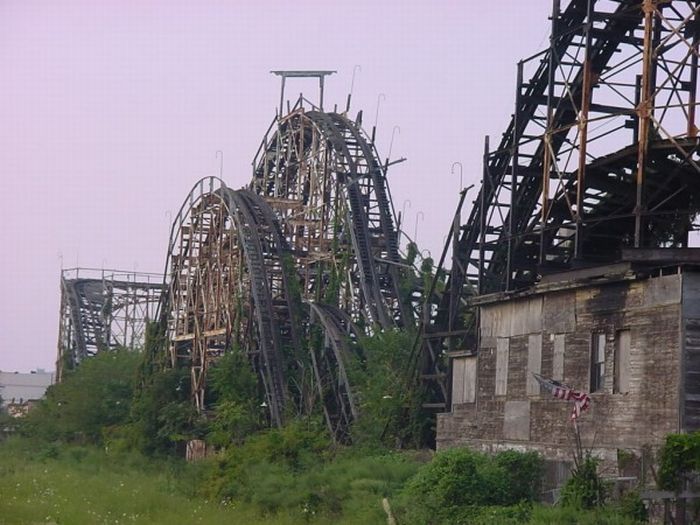
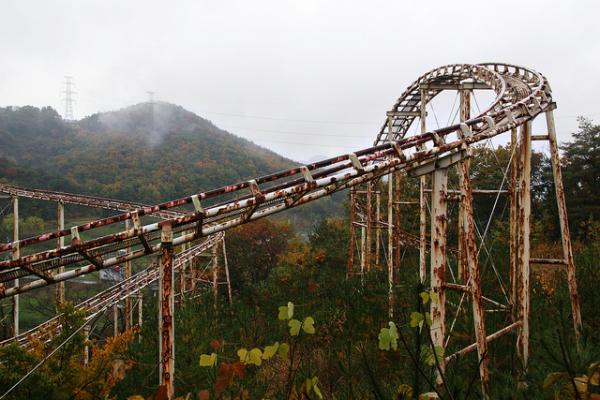
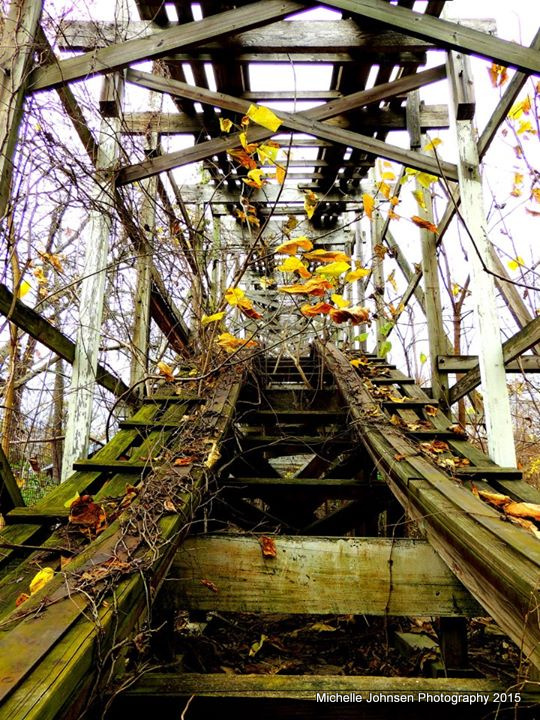
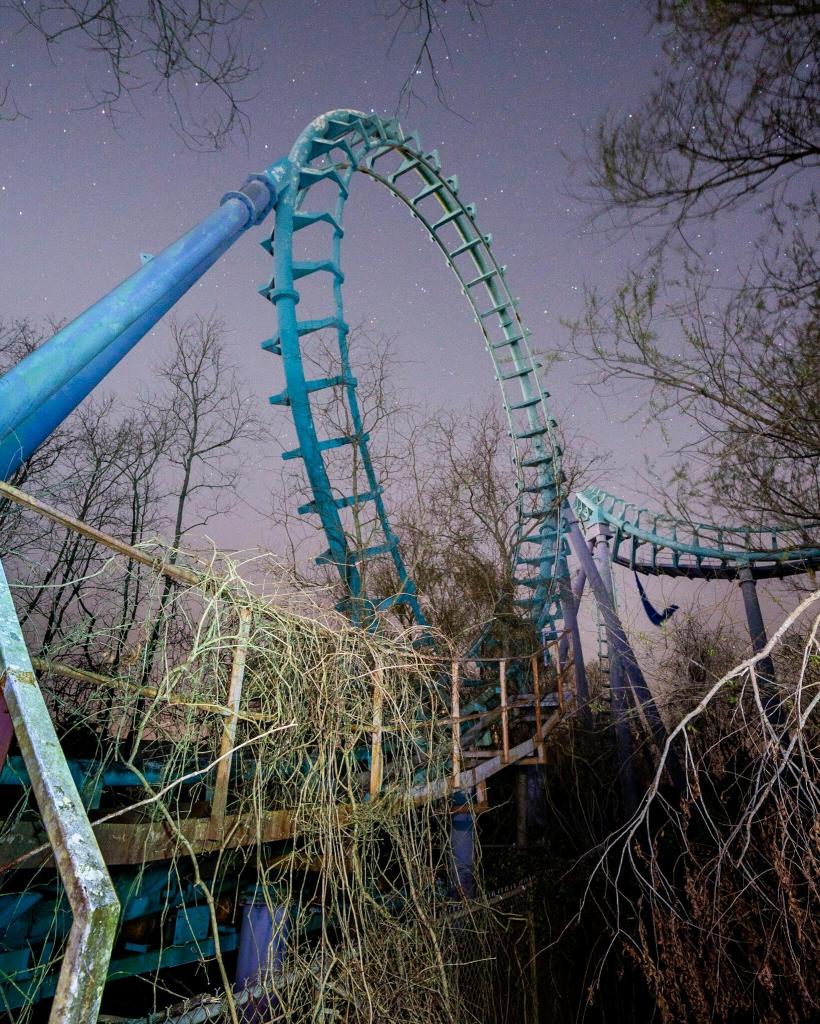
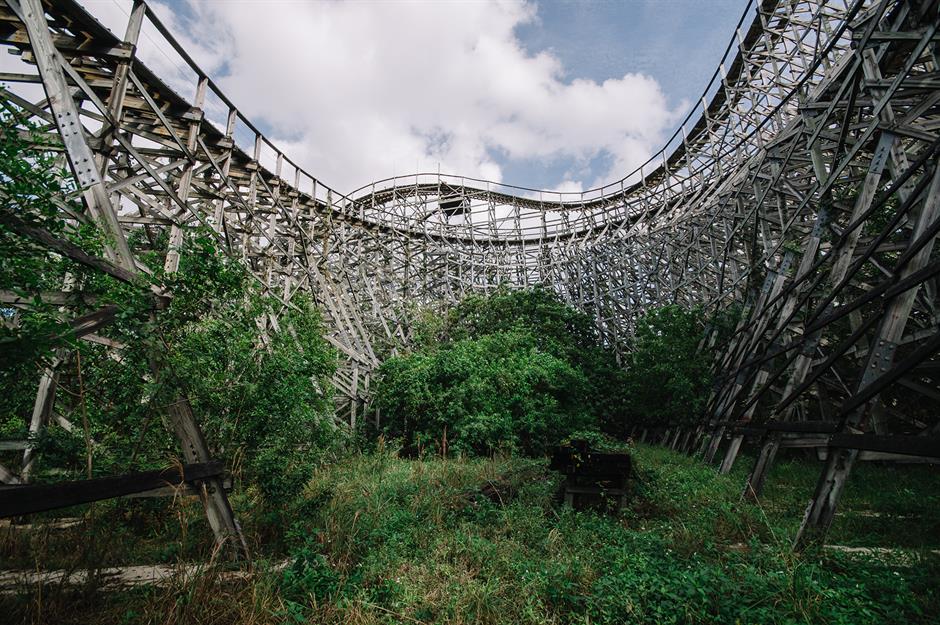
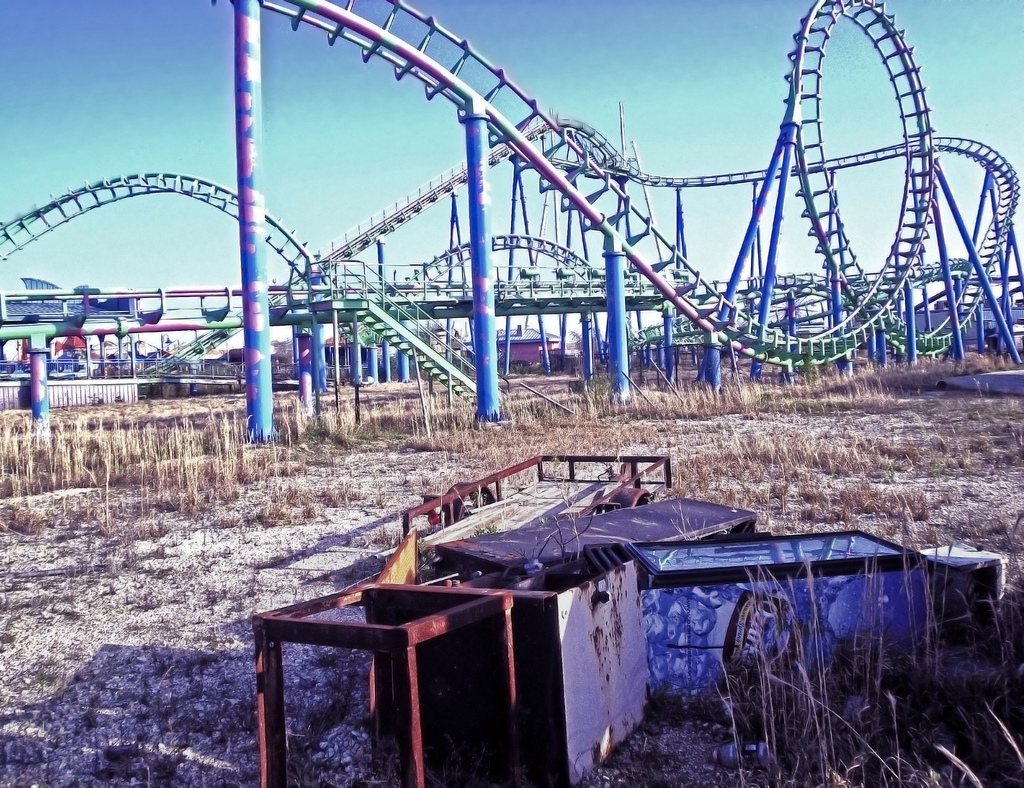
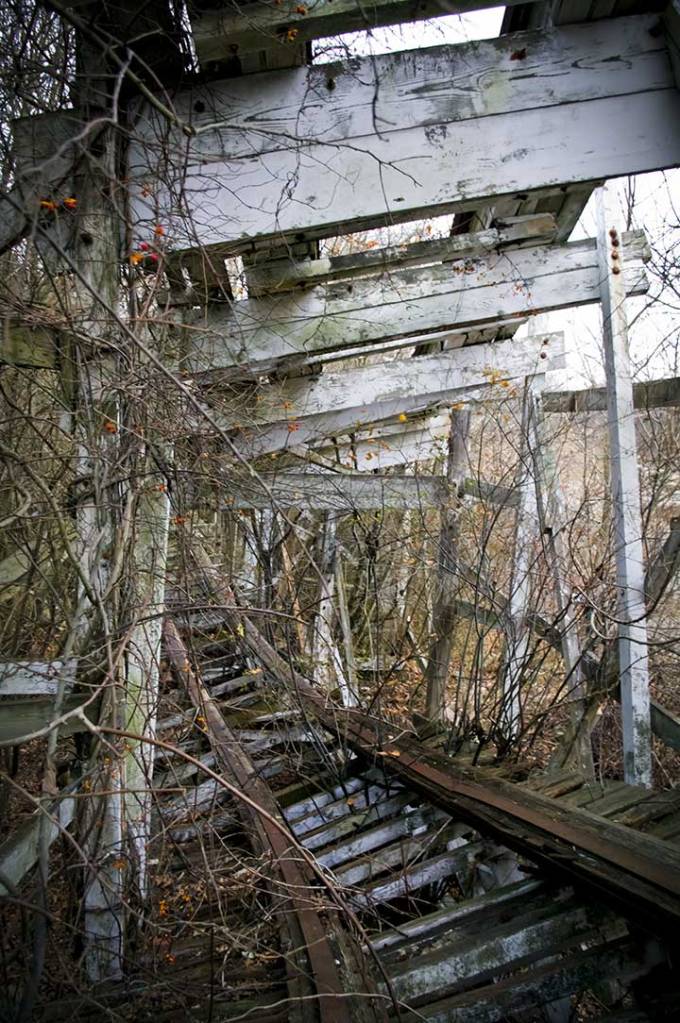
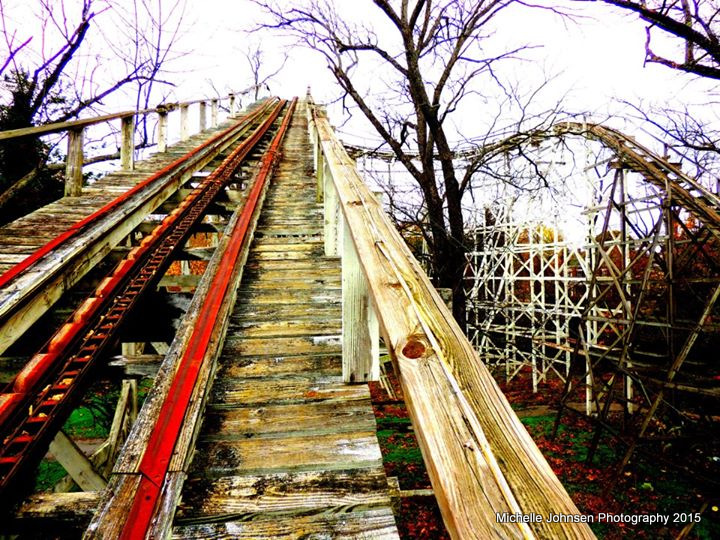
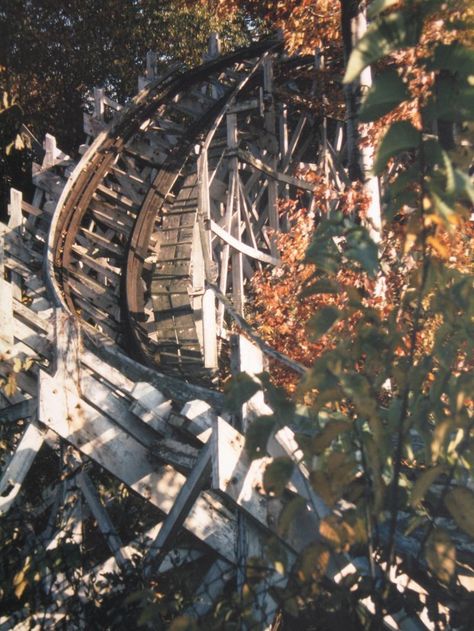
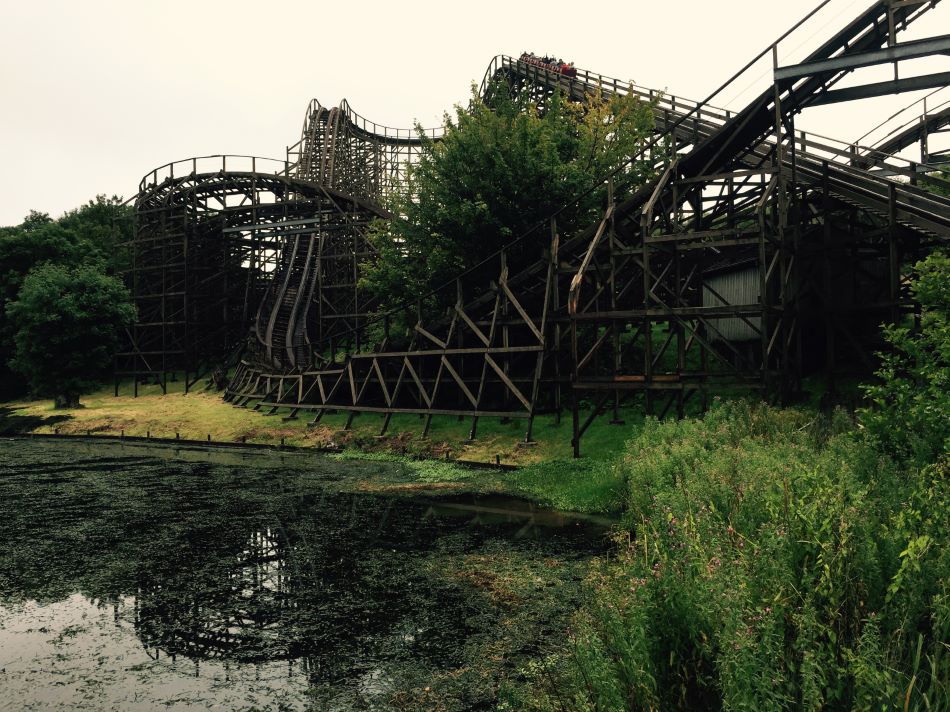
I’m a horror guy and there are times when even horror can be beautiful and majestic. Such is the case here, where abandoned rollercoasters have been reclaimed by Mother Earth. Neglect becomes gloom becomes fantastical wonderment. It’s damned depressing yet compelling, nonetheless. Perhaps you’ll find the same mysticism in these dead coaster photos.
–Photos by Michelle Johnsen, Shane Thoms and others from the public domain





































 Roads Lesser Traveled