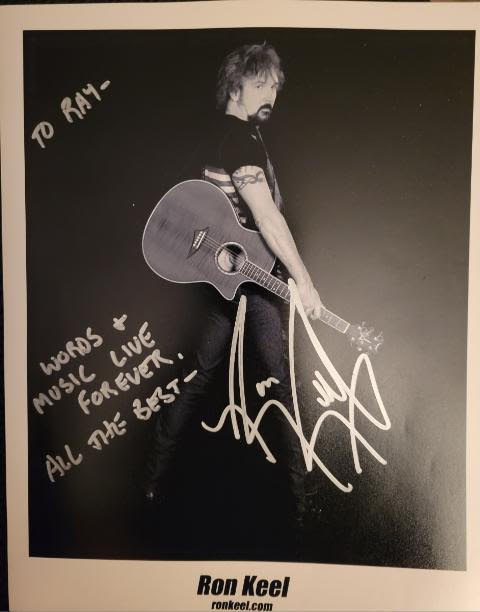
One of my many mementos from writing in the music scene is this glossy photo sent to me by Ron Keel following an interview we did a handful of years after the heavy metal band bearing his name had folded a second time between three stints.
Keel was a second-tier metal band from the 1980s who enjoyed a run of success with albums like Lay Down the Law, The Right to Rock, The Final Frontier and their self-titled Keel record from 1987, the latter gaining them routine play on MTV’s Headbangers Ball of their hit single, “Somebody’s Waiting.” Keel was also known for their covers of Patti Smith’s “Because the Night” and Rose Tattoo’s “Rock ‘n Roll Outlaw” from the underground ’80s trash classic, Dudes.
You probably figure with my novel, Revolution Calling, coming out soon, I’m feeling a lot of ’80s nostalgia and you’d be right. I remember playing Lay Down the Law and The Right to Rock in my bedroom, and even though The Final Frontier and Keel softened their sound, those two also got solid play from me back in the day. My dad went to great lengths to score me The Final Frontier for Christmas, much as he’d done with Kiss’ Creatures of the Night years prior.
The controversial album cover of Lay Down the Law had my mother gnawing on her tongue, but otherwise Keel was a straightforward metal-hard rock hybrid who disbanded for part of the 1990s while Ron Keel and guitarist Marc Ferrari kept glued to a dying metal scene from different avenues, Ferrari fielding a gear clinic column for Metal Forces magazine.
Keel took a shot at two reunions, releasing Keel VI: Back in Action in 1998, then Streets of Rock ‘n Roll in 2010. By the time I interviewed Ron Keel before Streets of Rock ‘n Roll was a here-and-gone thing, he’d cropped and teased his headbanger locks and grew a facial pattern as a would-be country singer. A super nice guy when we’d interviewed, he’d obliged me all the talk about the metal days that I wanted, and I know he appreciated my asking how the band got selected for the Dudes soundtrack. I’d done my homework on his country material and gave him solid feedback, since the guy always had nice, clean chops capable of shredding the octaves.
This signed photo from Ron came to me about a week after our interview. Unsolicited, he’d asked his press agent for my forwarding address and personalized the photo. In return, I gave my thanks through our respective channel, but it’s the message Ron left me on that picture that resonated then and even more so today.
Generations come, generations fade. Fads turn innovations by necessity before turning commodities once again. Yet words and music do live forever.
–Ray Van Horn, Jr.
 Roads Lesser Traveled