A personal road lesser traveled, some time on a Sunday to read with the fur babies keeping me company. Then again, getting a hike in with the one you love on the same day is nothing to sneeze at, either…
“The Chase,” Spoken Word by Ray Van Horn, Jr.
Five From the Shelf Friday – 3/3/23
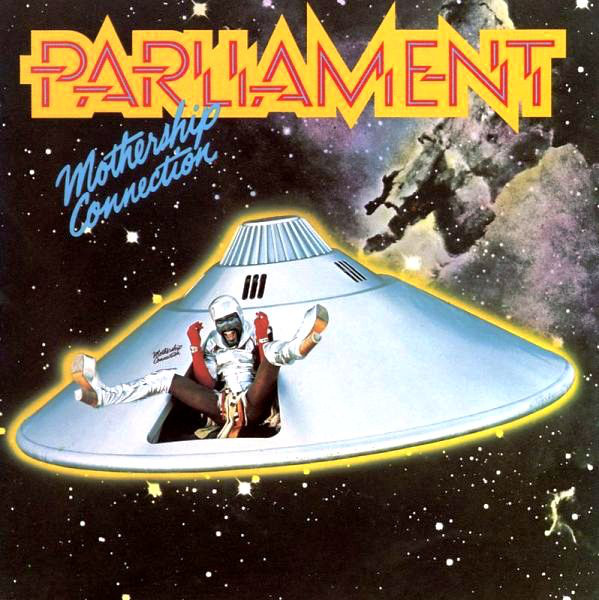
Parliament – Mothership Connection
I had the pleasure of seeing George Clinton with P-Funk play live years ago. It was a marathon performance lasting four-and-a-half hours and still the man went on, after the venue was half full after being a sold-out attendance. I was there with my ex-wife, who deserves a medal for hanging in there with a funk overdose only geeks like me could appreciate. The secret to Clinton’s success in his live habitat, since I was told by other fans he notoriously plays on until a few people are left, no matter small or large the venue, is that he shuttles his family members onstage to rap or slap bass in between songs. Or he toodles off in the wake of his own scats while P-Funk jams away for minutes on end until he emerges once again. A funk spree for the ages at any those gigs.
All serious fans of Funkadelic or Parliament know any album by each is subject to tight, focused rhythms and a showing off of soul chops you sometimes forget exist in their ensembles…or it’s a freestyle freak fest, like Parliament’s lauded fourth album, Mothership Connection. A concept album pretty daring for its time, Clinton’s “Star Child” persona opened the world to a possible neo-state of existentialism with a grand funk party in outer space. A further reach into the universe beyond what Funkadelic posited on Free Your Mind and Your Ass Will Follow and Cosmic Slop. At its core, Mothership Connection is an anti-funk, subtle protest piece in the interest of black empowerment, which gained a hip-shaking foothold in American music of 1975 before being bastardized into disco. The fiery civil rights movement bled into the Seventies with a sense of self-awareness that Mothership Connection boldly stamps with doobies tucked at the ready, a more peace-laden call for equality, if not a pro-black power stance without the upraised first, or later in history, a protesting kneel. The Seventies were also obsessed with the space race and science fiction, thus Mothership Connection capitalized on a theory that life has to be more fair, more equal, if left in the hands of people getting off a tainted, racist Earth and letting it all hang out. If only Malcolm X and Martin Luther King, Jr. had lived to see it all…
“P Funk (Wants to Get Funked Up)” dawdles around in spots with nattering amongst the band, to themselves and to their listeners. All of it’s on purpose, because once the funk drops on this cut, it drops. Some of Parliament’s most badass licks show up here and especially on the hard driving “Unfunky UFO” and “Supergroovalisticprosifunkstication.” Try saying the latter at any speed. Naturally, the calling card tune to Mothership Connection is Parliament’s best-known anthem aside from “Flashlight,” the nappy party blast of “Give Up the Funk (Tear the Roof Off the Sucker).” Resistance is futile whenever this cut spills out of the speakers, yownt!
Mothership Connection, which any soul or funk-loving freak must tout in his or her collection like a badge of honor, is also well-known for its easygoing slides from “Mothership Connection (Soul Child),” its low-key pleading passages of “swing down, sweet chariot, stop, and let me ride” being brought to second life as a beloved rap sample in the 1990s from Dr. Dre. Parliament gave us all “the bomb” on this one, assuming you have enough jive inside to let it detonate inside your ears. Yownt!
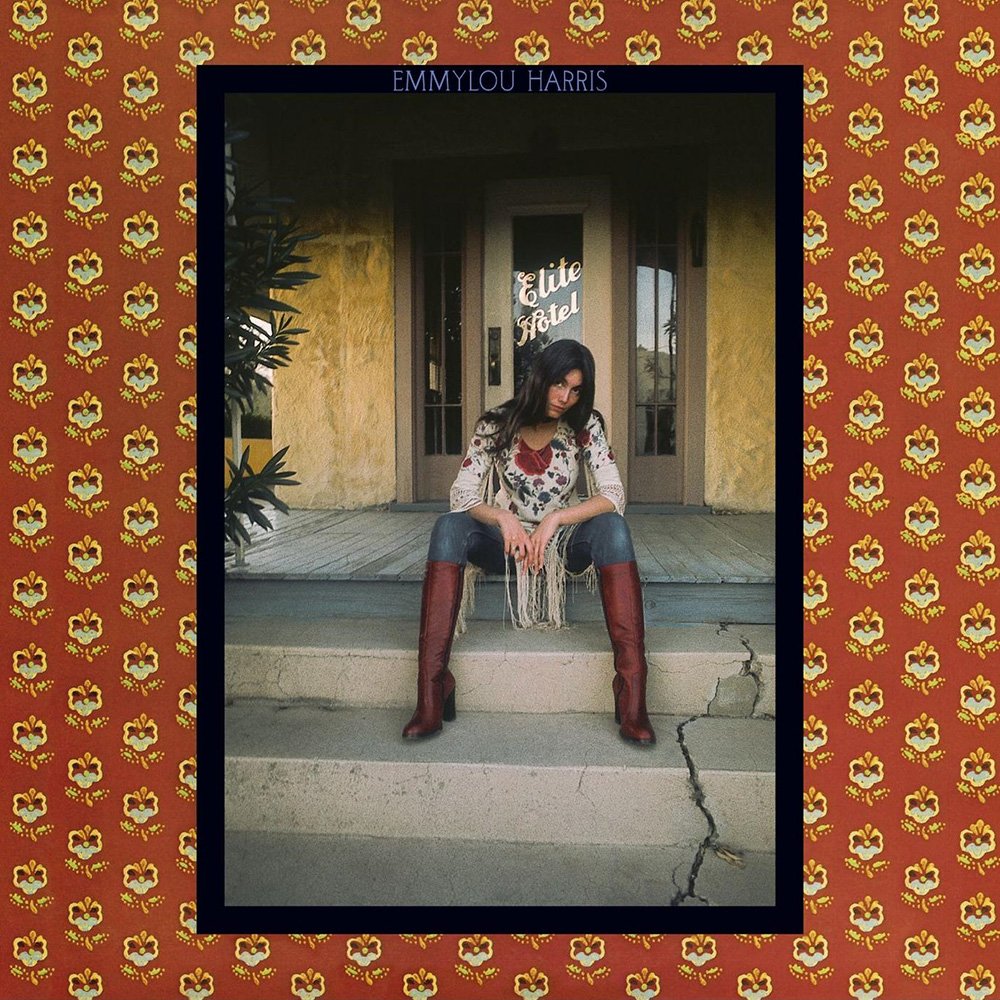
Emmylou Harris – Elite Hotel
My parents used to tell me when I was headbanging teenager that I would one day grow up to like country music. I was emphatic in my rebuttal, much as my own son is against just about anything I listen to that’s not today’s hip hop. I tease him now and then, reminding him I raised him a revolving diet of metal, alternative, punk, jazz, classical, funk and soul and 1950s rock ‘n roll. Only the Fifties have stuck with him at this point, more in reverence for his grandfather. I do see myself in him when he sneers at me if I catch him poking his cell phone at the car stereo when something heavy comes on to capture the song title and artist. Only a matter of time, kid, just like it was for me. It took me many years down the road, but you know what? My parents were right. I did grow to like country music, only with a caveat.
There’s little to no modern country, I should say in the mainstream, that I can get with, though I’m always bending an ear to alt-country, alt-folk and underground hipster country, along with clattering bouts of psychobilly which throws nods to Hank Williams and Hank Snow all the time. My cutoff for country appreciation is around the mid-1980s. Thus, it’s not Taylor Swift, but Emmylou Harris, who is my be all, end all when it comes female country singers. And there are tremendous ladies having come down the bend from Nashville, Texas and the southern quarters. Patsy Cline a de facto choice. Wanda Jackson being a royal badass for country and rock ‘n roll in her time, like her male counterpart, Jerry Lee Lewis. I enjoy Harris’ more subtle seduction and swooning angst which float beneath her music. I feel sparks of lust by Harris’ singing alone, as much as I, like most of her fans, just want to sling a brotherly arm around her shoulders and say, thank you for the empathy, here’s some in return. If the idiom that country is crying in your beer music, Emmylou Harris can make you want to face plant into your suds.
At the same time, Emmylou Harris has a maverick side to her music, which could put her in good company with Waylon Jennings, Willie Nelson, Tompall Glaser and Jessi Colter and the celebrated Outlaw brigade of country music of the Seventies. Elite Hotel is probably my favorite Emmylou Harris album, one reason because every single instrument (played by 24 musicians including Harris and even Linda Ronstadt on backing vocals) you’ve ever thought of in 1970s country dashes her songs including dobro, mandolin, strings and pedal steel. Elite Hotel is one of the most textured country albums I’ve ever heard, and it’s mixed between brisk and up-tempo numbers to pokey melancholia. Between are naughty little nuggets like “Feelin’ Single, Seein’ Double” and “Ooh Las Vegas” to give Harris’ good girl image at the time a little of bit street tarnish–in a good way
Harris is only credited with co-writing the peppy opener, “Amarillo,” while the rest of the album bounces between covers and tunes from other contributors. She does a spectacular take on The Beatles’ “Here, There and Everywhere,” while Buck Owens’ “Together Again” is even sweeter under Harris’ charms. I’m especially fond of the powerful anthems, “One of These Days” and “Till I Gain Control Again.” You see, my parents told me back then, the older you get, the more life you live, the more you start to get country.” I get it, Mom and Pop, I get it.

Siouxsie & The Banshees – Tinderbox
There are some albums I feel so strongly about, so much in love with that I catapult them to head of their respective genres. In the same way I declare Iron Maiden’s Powerslave the finest heavy metal album ever laid down, so too would I drop the tag upon Siouxsie & The Banshees’ Tinderbox for alternative rock. This, amongst heralded classics such as The Cure’s Disintegration and Head on the Door, Depeche Mode’s Black Celebration and Songs of Faith and Devotion, New Order’s Technique, Joy Division’s only two albums, Closer and Unknown Pleasures, Peter Murphy’s Deep, PJ Harvey’s Rid of Me, Sisters of Mercy’s Floodland, Ride’s Nowhere or The Smiths entire catalog.
A revered act amongst Goths and the esoteric community, most fans cite Kaleidoscope, Join Hands and the immortal Juju as their favorite Siouxsie & The Banshees album. There are plenty who subscribe to the vampish anti-pop of Peepshow. I listen to Siouxsie and her post-punk phenoms at least every other month, the first go-tos are always Juju and Tinderbox, the heavier lean going to the latter, while my witchy friends are most wont to glom onto the murky magick spun into the former. Both albums spellbind me, pun intended, but Tinderbox, man…
Siouxsie Sioux and her right-hand man, bassist/keyboardist Steven Severin were in a transitional phase with Tinderbox, not only bringing aboard the hypnotic John Valentine Carruthers on guitars and keys (he is beautifully sinister in the last stanza of “92 Degrees”), but in the glossy refinement the band had been building up to. Tinderbox is a decorative album, an ethereal album, a layered masterpiece with all components moving flawlessly within their own company. Superstition later tried to be a diva-ish alt-pop monster, but they’d already achieved it here on Tinderbox and with far more moving parts. The irresistible pop punch of “Cities in Dust” has enjoyed a re-emergence in today’s listening society, partially because of the beat, partially because it’s textured with so much melody and because it’s a total kick wallowing with Siouxsie Sioux on the chorus, “Whoa…ohhh…whoa…oh, your ciiiiityyyy liiiiiesss in duuuuuuuuuuooooooost….my friend…”
Siouxsie Sioux is at her sensual best, but there’s so much to Tinderbox you need to listen to it repeatedly to soak up every nook and cranny of it. Drummer Budgie planted one of the all-time great rock percussion performances in history on Tinderbox you’ll need a spin or two just to key in on him alone. Whether he’s in full slam mode on “Candyman,” dropping marching snare rhythms on “92 Degrees,” dancing luxuriantly across his echoing toms and snares on “Land’s End,” “Cannons” and “Party’s Fall,” every single track belongs to Budgie. Listen to him explode all over the final minute of “Party’s Fall,” it’s sheer rapture. His snappy rhythm escorting “The Sweetest Chill” is made even more savory with dancing hi hat taps without ever losing his stride.
Seriously, I could spend this entire writeup on Budgie alone, but what Tinderbox did better than any Siouxsie & The Banshees album was mixing their ghostly keyboards and tapestried strings into the most palatable and rich tones ever dared in alternative rock. Every single song, especially if you get the reissue with the frolicking instrumental “The Quarterdrawing of the Dog,” is worth your undivided attention. “Quarterdrawing” sounds like Robert Smith of The Cure dropped in for a spell, since he’d already done a touring stint in the band to help out once, and he also enjoyed a side foray with Steven Severin in The Glove. What a glorious time in 1986 to be a part of this scene.
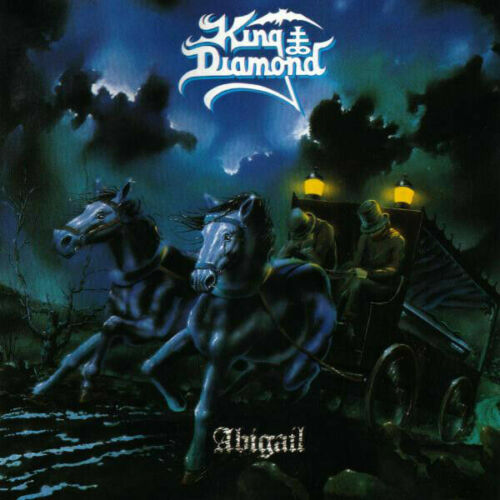
King Diamond – Abigail
Only a devout metalhead of old would put the voice (or shall I say it in plural form) of the legendary King Diamond upon the highest pedestal of musical achievement, much less heavy music. Only Ronnie James Dio and Rob Halford supersede King Diamond, front man of the groundbreaking Danish arcane metal band, Mercyful Fate, Diamond himself enjoying a doubly spectacular solo career. So much King Diamond (real name Kim Bendix Petersen) and his wide-flung vocal ranges of countertenor and falsetto behind the unraveling of his horror stories in song earned him the high praise as “The Stephen King of metal.”
A King Diamond listening experience is an experience, period. If it’s your first time around him, be prepared. His style is not for the timid. Only a weirdo like myself could listen to The Weeknd before coming to a King Diamond album, but if Siouxsie Sioux as mentioned earlier, had an endearing set of swirling vocal ranges, King Diamond trumps her with his confrontational up-and-down pitches. The unholy corpse paint Diamond’s always worn onstage is the evil devilution from Kiss’ kabuki facades, and along with Mayhem and Celtic Frost, the black metal scene scored its image, for better or worse.
Vocally, King Diamond gives personification to his muses inside his macabre metal stories through yowls and growls and shrieks and yet all of it is superb syncopation. For most fans, myself included, Diamond’s second solo work and first concept album, Abigail, remains the highest hallmark of his considerable achievements. It tells the spooky tale of a young couple, Miriam Natias and Jonathan La’Fey in 1845, inheriting the manor of Jonathan’s lineage and being terrorized by the “family ghost,” Count La’Fey. In essence, a Hammer film metal style.
The supporting cast behind Diamond was nothing short of first class with Andy LaRocque and Michael Denner on guitars, Timi Hansen on bass and drumming superstar Mikkey Dee. Dee would later go on to a spectacular, decades-long run with Motorhead, and the foundation to his prowess is found all over Abigail, particularly his trusty double hammer on “A Mansion in Darkness” and “Omens.” As a single with a video for “The Family Ghost” nobody ever expected to see on MTV’s Headbangers Ball, the song remains an ethereal metal classic for all time, along with the unnerving title track. The lurching and marching intro section of “Arrival” hints at the doom to come, while the album’s dramatic backend, “Black Horsemen” is an emotional finale and seeming farewell to an exquisite horror classic in music form. I say seeming farewell, since Diamond delivered a sequel fifteen years later in 2002, Abigail II: The Revenge. When in horror…
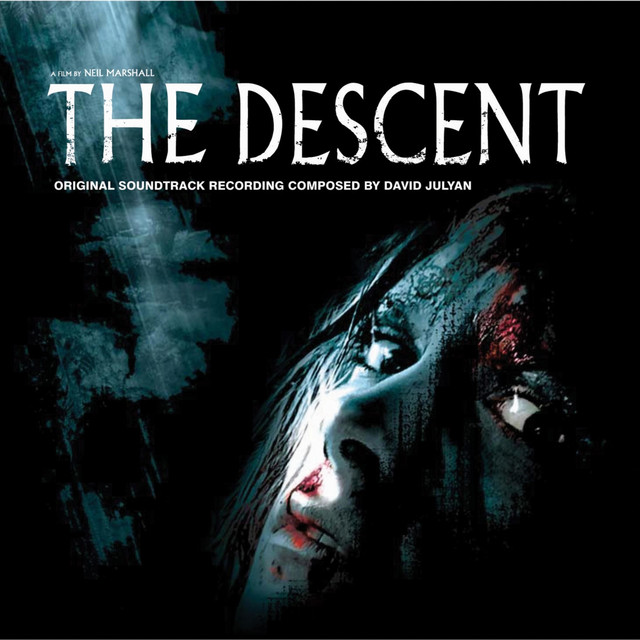
The Descent original soundtrack – David Julyan
While I was writing my article for Horror Tree on badass women of horror this week, I spun a few soundtracks to keep me in topical flavor like Goblin’s Suspiria, 1977, Pino Donaggio’s haunting score for the 1976 Carrie and David Julyan’s supple, sometimes explosive flow behind 2005’s The Descent. As one of the best horror films of the modern age, The Descent in concept hits a raw nerve, especially if you’re claustrophobic. If you’re an adventurous outdoor explorer, the prospect of spelunkng an in-the-know-only cave in the Appalachian Mountains seems like a hot time, especially for a group of friends carrying a tradition for high stakes outdoor weekends.
When one of them, Sarah (Shauna Macdonald) has the extra baggage of personal devastation coming to the table, it only makes The Descent that much more guttural as the horrific events unfold. Bad enough a cave-in happens, expected in a horror movie but still terrifying when it unfolds before the viewer. Bad enough deceit revealed to Sarah from the film’s mouthy snot, Juno (Natalie Mendoza), unfurl at the height of the girls’ uncertain predicament. Nobody coming to see The Descent back in 2005 were prepared to be assaulted (much less the characters inside the caverns) for those ravenous, nosferatu-looking mutants (called “crawlers”) only comic book nerds would recognize from the pages of The Fantastic Four, The Mighty Thor and The Incredible Hulk. The fight to escape the cave itself is so grand it presents loss amongst the fivesome, this before the monsters ever show up. Once they do, holy shit.
David Julyan masterfully threads his symphonic yarn behind the story, keeping a breezy tone of the main theme, established on “White Water Rafting,” repeated here and there throughout the score as needed to deposit a false sense of insecurity. Hollow, diving synths jerk us into the hole with the girls on “Into the Cavern” and “Down the Pipes” until smacking us all upside the ear with “The Tunnel Collapses.” Julyan paints anxiety through the remainder of his score with soft, cautious measures, pounding the eardrums with catatonic blasts during action spikes. For all this toying, however, the payoff comes on track 18, “The Crawlers Attack,” in which Sarah makes her dramatic escape. In the movie, you see all of Sarah’s shock, her naked anguish, all that she’s been through from the loss her husband and child, and now her friends. David Julyan orchestrates a sorrowful set of strings and horns behind Sarah it rakes the soul to bear audially. A glorious and heartbreaking denouement to a horror tale already pinching at our nerves.
–Ray Van Horn, Jr.
“A Midlife Life Awakening,” Spoken Word by Ray Van Horn, Jr.
As always, thank you for your support of my work and this blog…
–Ray Van Horn, Jr.
Running the Godzilla vs. Kong 10K

A quiet spell here at Roads Lesser Traveled last week due to a spike in business at work, a rush to find new digs to live for multiple reasons, first and foremost, the welfare of my son. TJ and I were successful in procuring a rental after one heartbreaking loss after another putting in contracts on houses and being undercut by shady selling agents holding their own silent buyers inside their pockets. We work in the real estate industry together aside from being mutual writers. It chaps both of our asses to rent again, but the market is just that brutal and cutthroat right now. Be prepared to go over $20K or more above an asking price if you’re going all-in, just saying.
Last week, I was also invited to write a guest post for Horror Tree which I just turned in last night. Stay tuned for my upcoming article, “From Scream Queen to Lady Badass: An Evolution of Women in Horror.”
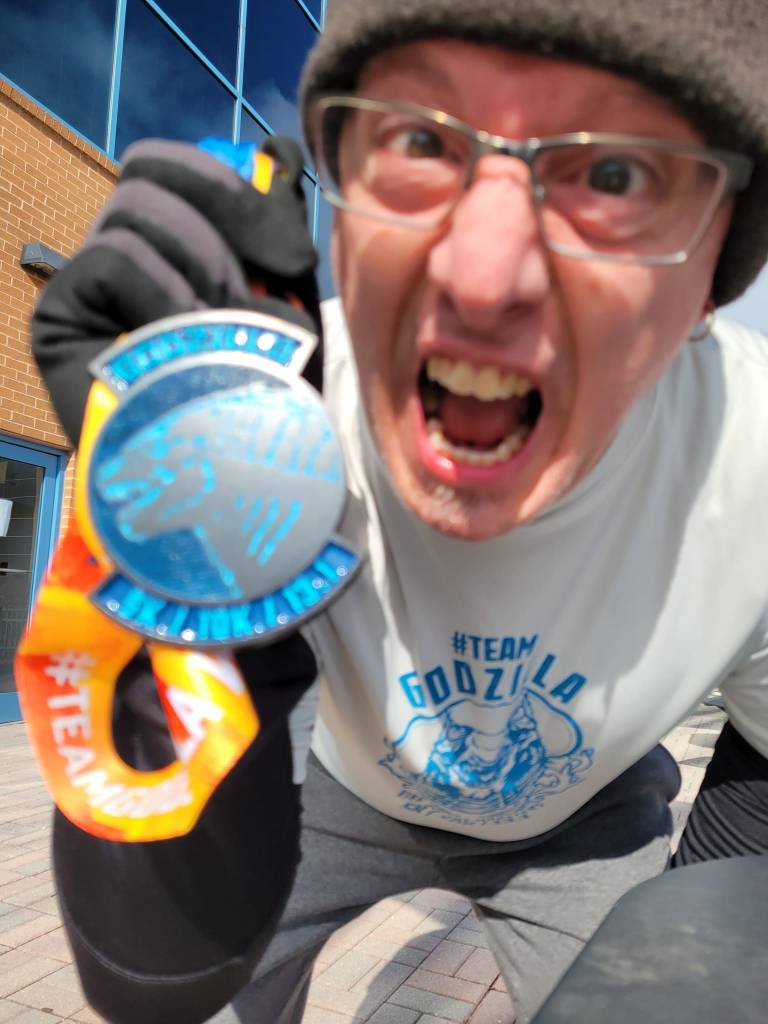
I also made the time to get outside on a crisp Sunday morning and run the Godzilla vs. Kong virtual 10K. Mad love for Kong, always, but anyone who knows my inner and outer geek knows it was a gimme I’d run for The King of the Monsters. #TeamGodzilla all the way! My running time was 1:06:23, meh, but it was a much-needed purging of all the penned-up angst from the past month.
Cheers, my friends…

–Ray Van Horn, Jr.
Oh, the Life Lessons “The Sneetches” Shall Teach…
–Ray Van Horn, Jr.
Five From the Shelf Friday – 2/17/23
Happy pre-weekend, y’all! The response to last week’s instalment of Five From the Shelf Friday was so upbeat it prompted me to continue on. I know I originally said I would write brief anecdotes about the albums I’ve selected, but, well, this week I’m a bit gabbier. I have a mix of rock, soul, electronic, metal and some horror romp music that’s far better than the dreck it serves. Enjoy, my friends!

Van Halen – 5150
If you were around when it happened, you no doubt recall the vicious division inside the Van Halen camp nudging an angry David Lee Roth to go solo, while the band recruited sweat rocker Sammy Hagar to fill Roth’s seemingly irreplaceable shoes. The DLR band went large with Roth hiring the best freelancing guns available in 1986: Steve Vai, Billy Sheehan and Greg Bissonette. Eat ’em and Smile and Skyscraper were as large as they sounded, big-time anthem rock filled with far more flurrying chops and scales than Van Halen. Roth was out to make a point, a George Steinbrenner or Jerry Jones of the rock trade. And yet the home camp delivered two albums without Roth that defined a generation as much as the Roth-led Van Halen albums did. Some diehard Van Halen fans balked at Sammy Hagar’s run with the band on 5150, OU812 and For Unlawful Carnal Knowledge. In fact, so divisive are listeners this period of the band’s history is often referred to as the “Van Hagar” era. So competitive were the stakes between 5150 and Roth’s Eat ’em and Smile in 1986 it was the fans who were rewarded more than robbed. “Yankee Rose” versus “”Dreams,” whew, the stakes couldn’t have been higher back then.
For Van Hagar, I mean Van Halen’s purposes, 5150 became a summertime infatuation, even though it came out in March, and I had it on cassette on release day. So far in theory from its predecessors, 1984 on back, the emphasis on a more commercial sound, staked out with “Jump” and “Panama” an album prior, 5150 was a pop rock juggernaut in its own right. I mowed my parents’ lawn and idled on their yard swing with “Good Enough,” “Best of Both Worlds,” “Why Can’t This Be Love” and “Dreams” (perhaps the most uplifting song Eddie VH and company ever dropped) through my Walkman while my knees jackhammered in time to the manic craze of “Get Up.” TJ and I had a glorious revisit to 5150 in the car and we sang nearly the entire hook-laden album together, while she gyrated in her seat like we were at the old Capital Center near Washington, DC. I told her about the time I switched my Spanish teacher’s instructional cassette with 5150 in her player as a prank, Sammy Hagar’s lead-in yowl, “Heellllloooooo baaaaaaaby!” startling the entire class. Good times, Senora Kirschensteiner, you were such a great sport. Those are the things dreams of made of…
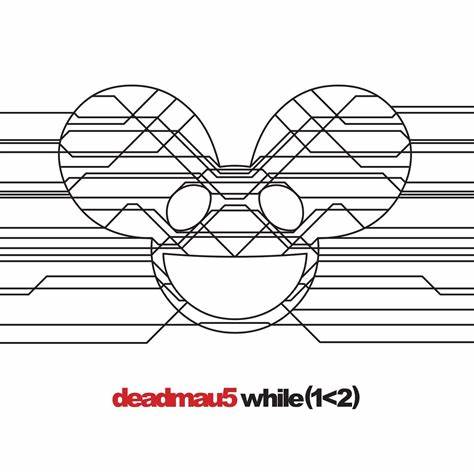
deadmau5 – while (1<2)
I began my music journalism career in 2003 covering electronic and Goth. Back in the day, it was still called “techno” with its numerous subcategories “chill,” “house,” “trip hop,” “breakbeat,” “trance,” “ambient,” “downtempo” and of course, the blanket phrase, “electronica.” Nowadays, it’s simply “EDM.” Whatevs. Joel Thomas Zimmerman, known better behind a console and turntable as deadmau5, has become one of the industry’s most respected (and to some, as reviled as Paul Oakenfold and Moby) electronic artists. A lot of electronic music fans label deadmau5 as progressive house music, which is more applicable to the bookend of his eight studio album (at this time) catalog. Earlier albums like Get Scraped, Vexillology, Random Album Title, For Lack of a Better Name and 4X4=12 show deadmau5 more in humming DJ mode as one of the most skilled remixers out there. Yeah, Zimmerman’s balloonish mouse headgear onstage has been one of his gimmicky draws, even if Marshmello hijacked his shtick and ran to the bank with it. 2016’s W:/2016Album/ was a sort of return to basics for deadmau5, but it’s 2014’s while(1<2) showing the man’s true progressive side.
This is a double album depending less upon deadmau5’s trademark throbbing bass bombs (the whumping opening number “Avaritia” and “Infra Turbo Pigcar Racer” aside) and going for broke with more articulate structuring using downtempo and ambient elements. For certain, deadmau5 was flaunting his love of Trent Reznor and Nine Inch Nails and not just from the blistery remix of NIN’s “Survivalism.” It’s blatant amidst his own numbers, “Creep,” “Acedia,” “Invidia,” the “Coelacanth” interludes and “Errors in My Bread,” the latter seeming like Reznor’s own outtake from the With Teeth album. Many fans express their joy with “Seeya,” featuring the vocals of Colleen D’Agostino, yet my lock-in to procuring the rare Best Buy version of while(1<2) came thanks to my son, who suckered me into watching him play the first Goat Simulator in many sittings. The ragdoll effect video game features an appearance by deadmau5 in animated form jamming to a mindless, droning crowd atop a building roof to the infectious twisted disco fling, “Petting Zoo,” available only on the Best Buy edition. Ba bum bump, ba bum bump, ba bum bump, ba ba…

Friday the 13th Part VIII – Jason Take Manhattan score – Fred Mollin
Let’s face it; there’s only one reason to discuss Friday the 13th Part VIII – Jason Take Manhattan and that’s the music. I remember going to see Friday VIII in the theater with a buddy, turning it into a review assignment for the entertainment section of my college newspaper. I used the phrase “Pushing it?” as my by-line, since the eighth installment of the sleazy and gory (degrees varying per movie) horror series might as well have been called “Jason Take a Cruise” instead. To Vancouver, since it was used for most of the city footage doubling as New York. The film is an utter disgrace (though nowhere as asinine as Jason Goes to Hell and Jason X) and yet I have Fred Mollin’s highly effective, synth-clashed score. In fact, I confess to owning the scores for all of the first eight Friday the 13th films. I have no shame in it. I only own the first four and the sixth movies as remembrance pieces of my teen years. Back in the day, the Friday films were party time for 80s teenagers. Such a wonderful era to be alive with your rowdy peers from school hollering at the cannon fodder characters, throwing popcorn at the screen, scaring girls in the crowd, which, in turn, got the whole theater screaming then laughing. The carnival atmosphere for Jason Voorhees’ antics stopped at the fifth film, which carries the notorious misnomer “A New Beginning,” this following the fourth film’s blunt lie of being “The Final Chapter.” But I digress. The preposterous ending of Friday V changed fans’ outlook, even though the sixth film, Jason Lives, was one of the best and funniest in the series. The period of forgiveness was short-lived.
By the time Jason Takes Manhattan came about, that theater was half full and nobody was laughing or chattering. A lot of groaning and complaining, though. Death by guitar bludgeoning? Punching a boxer’s head off with one blow in a seriously dumb duke atop a rooftop? Jesus wept. Only when Jason flashed his gnarled face to a group of smartass punkers in Times Square did anyone show life they were still there watching. Some people complained the lack of Harry Manfredini’s trusty ki ki ki ma ma ma stalking echo within the music did Friday VIII a bigger disservice. Manfredini composed the first six films, though some passages were cannibalized over and over throughout the other films including Part VII: The New Blood, which Fred Mollin contributed to. All said in what was a suicide mission, you have to give Mollin credit for his moxy being affiliated with a such a turd. A shame, since he puts a game effort into his work here.
Separated from the film itself, Mollin’s cataclysmic keys were representative of the direction horror soundtracks were heading in the late 80’s, though the tip of the hat goes to John Harrison earlier in the decade with his synth scores behind Creepshow, Day of the Dead and Tales From the Darkside. Even Manfredini himself expanded his horizons by blending synths and electronic into his often-peppy score for Jason Lives. Fred Mollin, who would go on to score Friday the 13th: The Series for television, did a terrific job in a wasted effort, so much his opening rock number, “The Darkest Side of the Night” became an unexpected fan jam only to horror geeks. Partnering up with multi-instrumentalist Stan Meissner, the song is included on the expanded Friday the 13th Part VIII soundtrack, which also includes the terrific rocker “Broken Dream” and “J.J.’s Blues,” numbers created for the female axe shredder in the film, played and pantomimed by Saffron Henderson. I am a total whore for “The Darkest Side of the Night,” which resurfaced again under the band name, Metropolis, go figure. Still, the pumping number remains one of my favorite power rock cuts of the entire decade. Just show some respect and try to survive…on the darkest night…
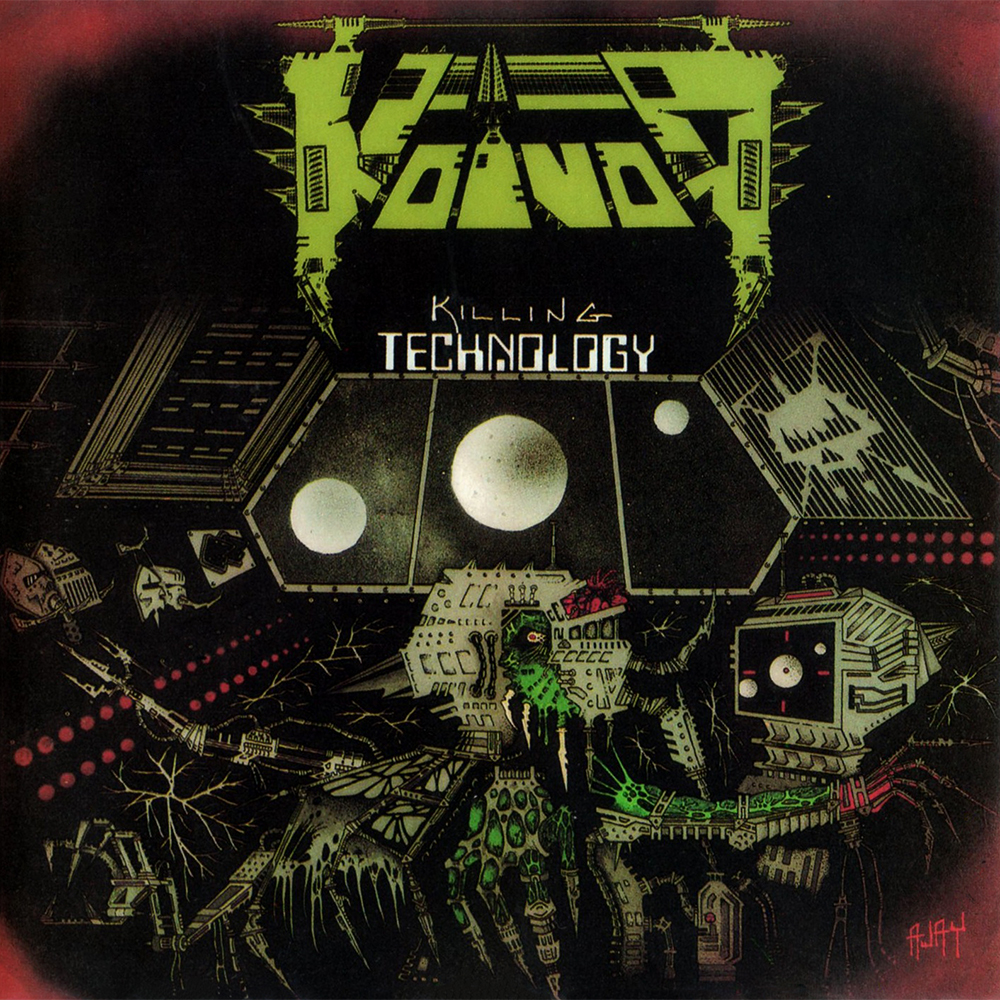
Voivod – Killing Technology
1987, one of my all-time favorite years. I was 17, a junior in high school, working 25 sometimes 30 hours a week in a grocery store outside of school. I had a girlfriend, one I thought I would one day marry, until she went away to college the following year. A lot of excellent memories of 1987. Headbangers Ball ruled midnight Saturdays. U2’s The Joshua Tree, Whitesnake’s seventh self-titled album, Manowar’s Fighting the World, GBH’s No Need to Panic, Public Enemy’s Yo! Bum Rush the Show and Voivod’s Killing Technology.
Voivod is, perhaps, a new name to you, but for the metal music society, this Quebecois progressive thrash band are nothing less than icons. Far more advanced than their speed metal contemporaries, decades ago and even now, Voivod is one of the dearest bands to my heart. I always say they’re in my DNA. I kept a calm reserve when I interviewed lead vocalist Denis “Snake” Belanger for Pit magazine, and I’m thrilled to pieces I maintain friendly open dialogue with former bassist, Jean-Yves “Blacky” Theriault, one of the fiercest and most articulate players to pick up the instrument. His low-keyed fuzz tones are all his own and referred to in the industry as a “blower bass” sound. The man could keep up, note-for-note, with Voivod’s late guitarist, Denis “Piggy” D’Amour, a shred legend in his own right.
Over the years, Voivod crafted ingenuine prog metal masterworks like Dimension Hatross, Nothingface, Angel Rat and later after Piggy’s death, The Wake and Target Earth. This is a band that once housed former Metallica’s Jason Newsted, for the record. Before all that, there was Killing Technology, the band’s third offering. On Voivod’s prior two albums, War and Pain and Rrroooaaarrr, speed and punk crunch were key, while Killing Technology dusted nearly all thrash and death metal acts of the late Eighties. This while fusing unfathomable melody amidst the breakneck velocity of “Overreaction,” “Tornado,” “Too Scared to Scream,” “This is Not an Exercise” and the outrageously fast title track. I was blown out of the water when I first heard Killing Technology, my first introduction to Voivod. It was an instant love affair which prompted me to declare Voivod in the same college newspaper I mentioned earlier as “the band of the future” during the Nothingface cycle. Their former label, Mechanic Records, were so thankful for my write-up they mailed me a full press kit with glossy photos, stickers, posters and my very first CD copy of Nothingface. This, before I actually owned a CD player. When I pulled Killing Technology down for a listen this week, I let myself loose like I did at age 17. Age 52, it hurts more to headbang, but well worth it, in this case.

Diana Ross + The Supremes – The Ultimate Collection
My early childhood years were filled with psychedelic rock and soul. Motown was always playing in the apartment my mom and dad began our lives in. Even though they would divorce after eight years, I still hear the echoes of Janis Joplin caterwauling over the acid screech of Big Brother and Holding Company on the Cheap Thrills album, while my dad and mom shared a lot of soul and R&B albums which mostly went to my dad, then came to me later. We’re talking Al Green, The Four Tops, The Temptations and of course, Diane Ross + The Supremes. Unfortunately, the records were in such disrepair I had to scrap them. However, for one of the finest Christmases I’ve ever had in 1996, my mother stuffed a box filled with classic soul and funk CDs to reinstall them to my library. All of the aforementioned, plus Barry White, Stevie Wonder, Curtis Mayfield, The Spinners, Isaac Hayes, Earth, Wind and Fire, Marvin Gaye, Sam Cooke, Parliament, Kool and the Gang, Maxine Nightingale, Aretha Franklin, Otis Redding, just a big box o’ soul. Keep in mind, my momma, whiter than white but hoisting a fistful of hippie inside, never missed an episode of Soul Train back in the day. I can still see her grinding that booty all around our living room on Saturday afternoons. Funny enough, the country stylings of Hee Haw followed Soul Train on our local UHF station and she watched that as well. It taught me early on to give a chance to music from all walks of life.
Later in life, I visited the Stax Records Museum in Memphis and rounded out my soul collection, coming home with Sam and Dave, Booker T & The MGs, Carla Thomas, Rufus Thomas, The Bar-Kays, The Dramatics and a few others. I kept comparing Stax to Motown in my head since it’s an inevitable topic, given the two classic soul labels were vying to rule the American airwaves. In terms of mainstream crossover acceptance, Motown won out easily, culling a diverse audience of races, while Stax had more “it” factor, more punch, more fang, more funk. Stax has a delicious dirty tone I love far more than Motown, and yet, what came out of Motown was soooooo grand, so layered, so rich. Three core guitars, including that shrill, singular note strike floating in the back of most Motown jams. The heated beats, the tapered textures of horns, strings, xylophone, organs, piano and bass…and then…Diana Ross and her Supremes.
My dad had the Supremes A’Go-Go and I Hear a Symphony albums and I used to stare at the cover of the former album with Mary Wilson, Florence Ballard, and the supremest of The Supremes, Diana Ross, twisting and jiving inside separate windows. I loved their colorful mod clothes, I loved their beautiful skin and ‘dos. It never once registered to me back then they were black, and I was white. I was smitten by them. When I heard them sing, I was entranced. As a 52-year-old man going on 53, I still am. This collection my mom selected for me is reminder of what a hot-selling powerhouse The Supremes were. While the biggest tunes they did are front-loaded, it’s simply awesome to hear how many hits continue to roll on this compilation. It’s damned hard to resist the lovesick dreaminess of “Where Did Our Love Go,” “Baby Love,” “Come See About Me,” “You Can’t Hurry Love,” “Reflections,” “Back In My Arms Again” and “Stop! In the Name of Love.” There is very little filler on this 25-song comp, making it mandatory if you want the Supremes in your life. What resonates harder the older you get is the estrogen-fueled retaliation torching a toxic relationship with the snarling “You Keep Me Hanging On.” Or the fierce defiance of “Love Child,” as much as the hopeful ode to love eternal at the end of the collection, “Someday We’ll Be Together.” Oh yes we will. Yes we will.
–Ray Van Horn, Jr.
Defining Peace On a Personal Level
I spotted this theme running at a few blogs last week, especially at Paula Light’s Light Motif II in answer to the original post at Maggie’s Tranquil Thursday #2. The idea is to answer four questions delving into the concept of peace as it relates to yourself. I felt compelled to play along.

How do you define peace on a personal level?
Having the confidence in yourself to know yourself, i.e. your strengths, your limitations, control over your emotions, the wherewithal to reject unconstructiveness, dismissal of negative vibrations, the capacity to push away selfish thoughts and people projecting their hate game toward you. It’s about knowing who you are, what you want from your life and setting boundaries on what’s acceptable to come into your life, then rejecting all that impedes your life’s progression. Knowing we are all fallible and on occasion culpable, we are left with a life’s journey always in need of refinement and navigation.
There is the correlation of peace and nirvana, as in a perfect state of being without problems, hurdles and drama. This is, unfortunately, a pipe dream. Even the best of us and those with the purest of intentions in how we project ourselves into the situations and relationships we seek can and will face the gauntlet life brings. It’s inevitable. True peace comes from rising above the cynical and embracing a path leading to the divine, taking comfort in the knowledge we are not alone, even when depression and despair hits us. Peace is knowing you are on the side of the light and knowing the divine is reaching out to you, in real-time or in an astral state, cheering you on to summon enough character to see the error of pessimism and self-ruin.
What does finding peace mean to you?
When you have reached a state of confidence in yourself and have found your value set to avoid succumbing to all that life presents for processing and in many cases, forces your hand to react, it answers that pesky voice in your head. If you’re like me, the chatty internal voice can badger at any time, any place. I often want it to shut up, especially at 3:00 a.m. when my entire laundry list of life drops down in a sequence like a movie’s final credits. Peace is when I can tell myself things are resolved or will be resolved, and I feel my pantheon float into my head, easing my burdens by letting me know I am doing my best and making choices they approve of. If I am doing wrong, they also let me know, and you know what? There’s peace in that, as well. Well-intended guidance, however it comes, is so valuable to one’s personal evolution.
Peace is also successfully swerving from the mundane, the aggravating and the insipid. The biggest joy in life aside from an intoxicating romance with the right person is getting to discover what a beautiful world exists out there and having the common sense to detect and appreciate it. Moreover, having a common courtesy not to destroy it for others.

What environment (the ocean, the mountains, the desert, etc.) brings you peace?
TJ and I are so happy on a trail. We love to hike, to bask in nature with as much quietude as we can seize for ourselves without getting so far from civilization as to cause ourselves discomfort. We commune with the Lord and Lady in the woods, we relish when we’re given response by the elements of air, earth, wind and water. Fire, only when contained for scrying purposes or candle and incense lighting. I like to travel, period, so I find such peace journeying by car to a far destination to see for the first time and to meet people in other towns. It’s a pleasure to see how others live and to compare either their isolation or their hectic habitue. I’ve always said I could easily live in the Outer Banks of North Carolina for all the oceanic removal from the world, yet I also feel a charge of electricity whenever I’m in Manhattan which makes me want to be a part of the intense action daily. Of course, hurricanes are the deterrent to the former, an outrageous cost of living the same to the latter.
I can say a trip out west for my 50th birthday to Devil’s Tower, Yellowstone, Glacier National Park, the Grand Tetons, the Badlands of South Dakota, along with Mt. Rushmore, Deadwood and Crazy Horse Monument was unforgettable. Devil’s Tower was a lifelong obsession I’d wanted to see since I was a child and seeing Close Encounters of the Third Kind in the theater back in 1978. If there’s anything that lived up to its hype for me, it’s Devil’s Tower. Peaceful doesn’t begin to cover it. Devil’s Tower is holy to many people from different walks of life. For me, it is likewise sacred and I expect I will return again before I die.

Is there a person whose presence puts you at ease and gives you a feeling of peace?
On the physical and intimate level, peace is having the right person nurture your heart, mind and body, providing a foundation of love, support, respect, trust, dialogue, motivation, partnership, sexual release, spirituality, laughter, goal attainment and future growth. Laughter and communication is one of the top priorities to a relationship. It’s so much sweeter when you like the person you profess to love. I am blessed to have found my best friend who fulfills all these things. In this part of my life, TJ my future bride brings me incomparable joy and peace.
Aside from her, my parents have long provided me a foundation of strength, wisdom, courage and inspiration. Going to visit them routinely over the years gives me a lift when everything in life comes crashing down or even puts me on an adrenaline high. My parents’ house is what I spent my teens in until I got married to my first wife. I love their house and have mostly wonderful memories since 1983 when they bought it. Coming over to their house always feels like it’s still my home, even with the home I share with TJ. My folks purposefully create a safe zone ambience for our visits, purposefully pushing for peace and calm with which to recharge.

–Ray Van Horn, Jr.
Wordless Wednesday – Brodown With a Good Godly Friend
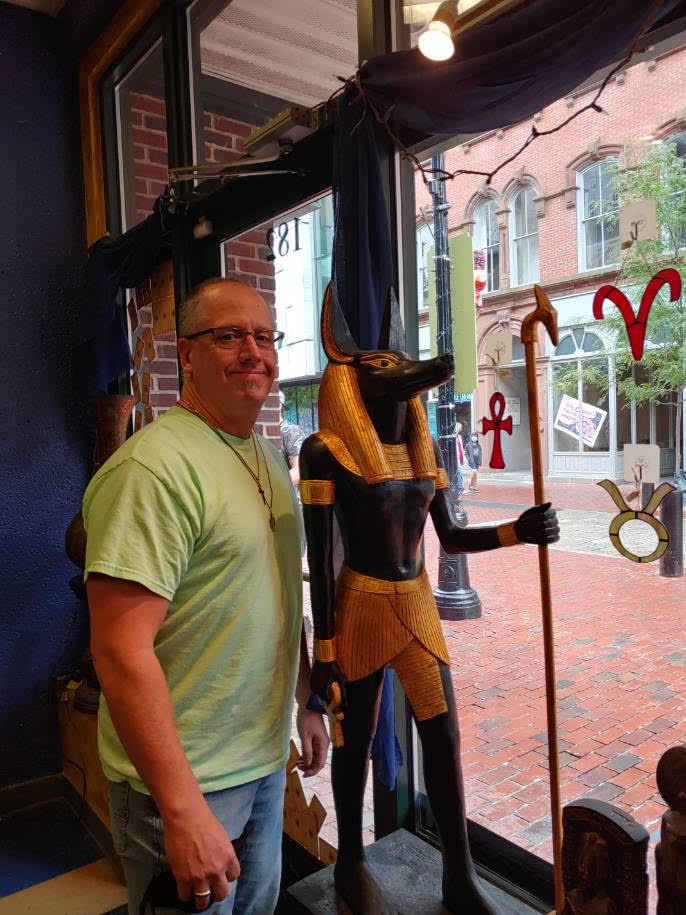
Photo by my forever partner-in-crime, TJ Perkins
Happy Lovebirds Day!
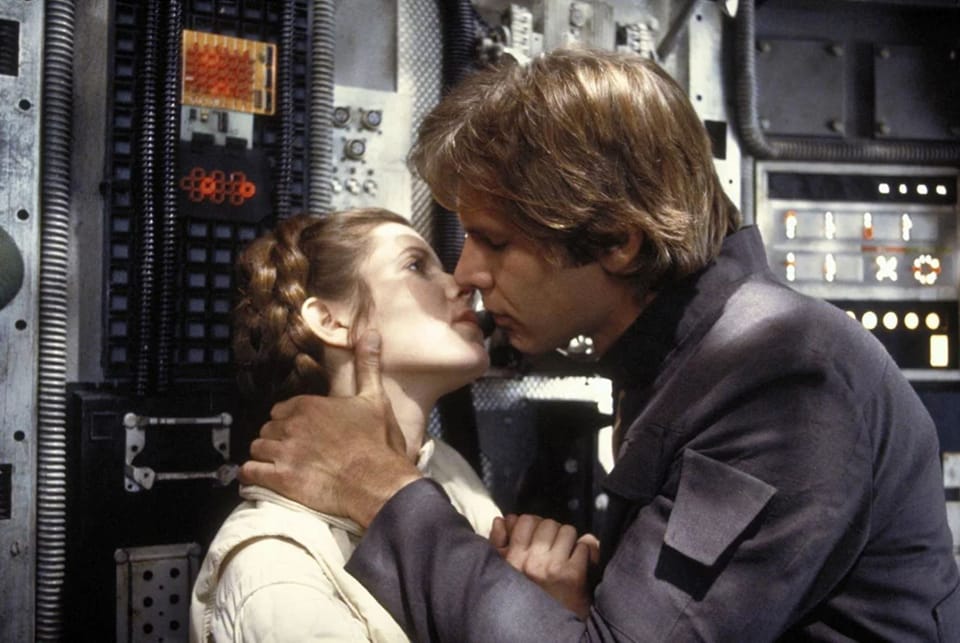
A happy Valentine’s Day to all you lovebirds out there and especially to mine, TJ, who prefers scoundrels to nice men. Love you to every end of the galaxy, from your scruffy-looking nerf herder. I’d fight hell through asteroid fields and carbonite freeze with a bounty on my head, just to get to you.
 Roads Lesser Traveled